Laminated glass vs tempered glass for South Florida homes: compare storm safety, breakage behavior, code needs, security, and everyday performance too.
A broken window during a hurricane is not just a glass-replacement problem. Once wind and rain enter a home, pressure can build inside the structure, damage finishes, and put the rest of the building envelope at risk. That is why the laminated glass vs tempered glass decision matters so much for South Florida homeowners. The right answer depends on where the glass is installed, the approved window or door system, and the level of storm protection the property requires.
For exterior openings in Miami-Dade, Broward, Palm Beach, and other high-velocity hurricane zones, glass should never be selected on breakage behavior alone. It must perform as part of a tested, impact-rated assembly that includes the frame, glazing, seals, hardware, anchors, and professional installation.
What Laminated Glass Does Differently
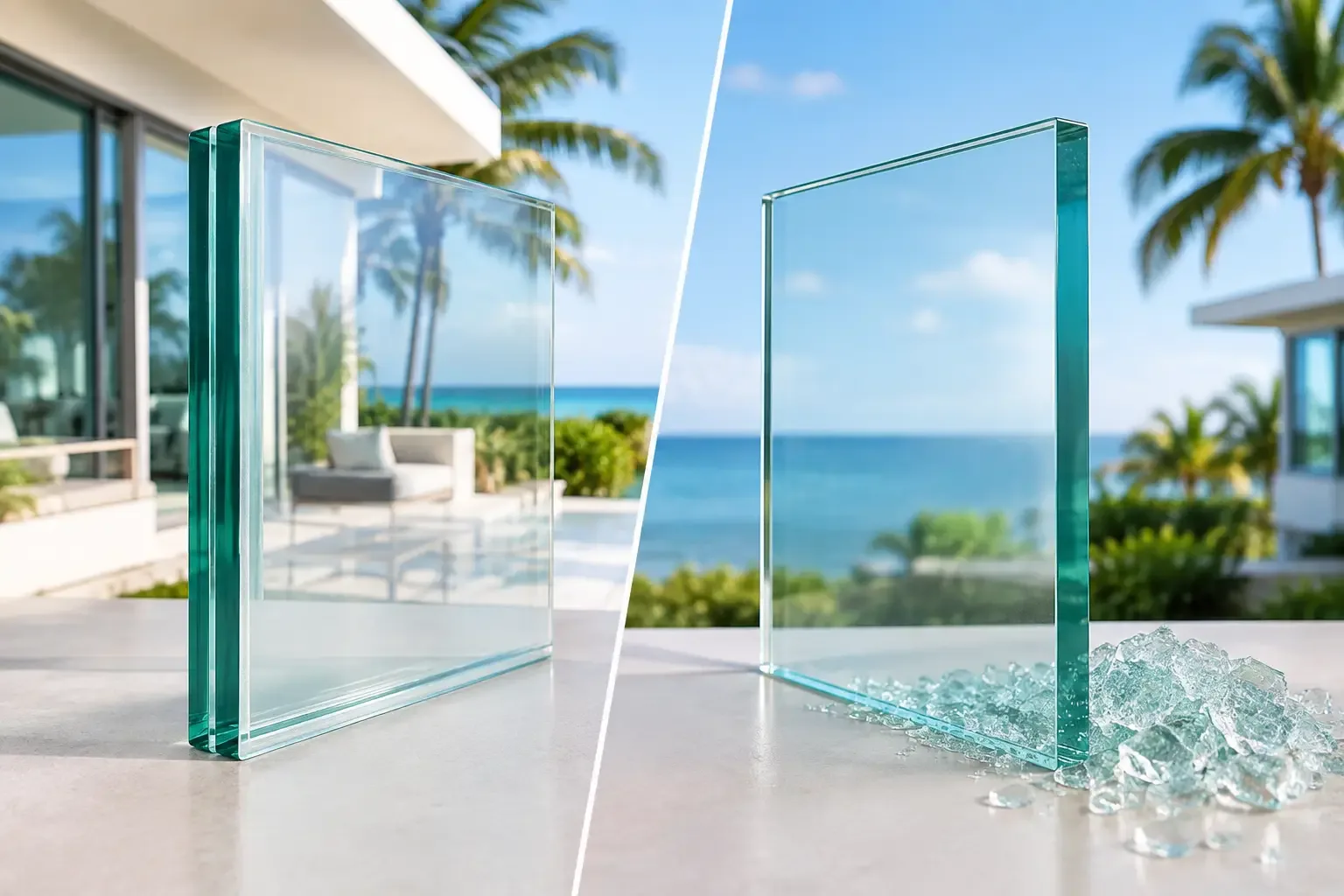
Laminated glass consists of two or more layers of glass bonded with a clear interlayer, typically polyvinyl butyral, or PVB. When the glass breaks, the interlayer is designed to hold the broken pieces in place. The outer surface may crack in a spiderweb pattern after an impact, but the panel can remain within its frame and continue to create a barrier.
That retained barrier is the defining advantage of laminated glass. During a hurricane, flying debris can strike a window or door with substantial force. A properly engineered impact system is tested to resist both the initial strike and repeated pressure cycling that simulates powerful wind loads. The goal is not necessarily for the glass to look untouched. The goal is to keep the opening protected.
Laminated glass also provides meaningful everyday benefits. Its bonded construction can reduce outside noise, filter a large portion of UV exposure, and make forced entry more difficult because the interlayer holds the panel together. For homes near busy roads, airports, schools, or active commercial areas, the sound-control benefit can be especially noticeable.
How Tempered Glass Breaks
Tempered glass is heat-treated to increase its strength compared with ordinary annealed glass. It is commonly used where safety glazing is required, including shower enclosures, glass doors, sidelites, railings, and certain windows located near doors, floors, or wet areas.
When tempered glass breaks, it is designed to fragment into many small, relatively blunt pieces rather than large sharp shards. This reduces the likelihood of severe lacerations, which is why tempered glass is an excellent choice for many interior and low-risk safety applications.
Its limitation is what happens after breakage. Tempered glass generally releases from the opening once it shatters. It does not have an interlayer to retain the fragments or maintain a weather barrier. For an exterior opening exposed to hurricane debris and wind pressure, that distinction is critical.
Tempered glass is not inferior glass. It is engineered for a different safety objective. It helps reduce injury from broken glass. Laminated glass is designed to retain the panel after breakage, a capability that makes it central to many impact-rated window and door systems.
Laminated Glass vs Tempered Glass in Hurricane Protection
When comparing laminated glass vs tempered glass for a South Florida exterior opening, laminated glass is generally the more relevant option for impact resistance. But homeowners should be careful with broad claims. Laminated glass by itself is not automatically hurricane-rated, and tempered glass by itself is not automatically unsuitable for every exterior application.
Hurricane performance comes from the complete tested product. A window may use laminated glass on both lites, or a laminated exterior lite with a tempered interior lite. The configuration depends on the manufacturer, the product design, the size of the opening, the required design pressures, and the applicable approval.
For example, a large sliding glass door faces different engineering demands than a small bathroom window. A corner window, a high-rise installation, and a waterfront property may each require different structural calculations and approved configurations. The frame must resist deflection, the glazing must stay properly supported, the hardware must remain engaged, and the anchoring must transfer wind loads into the building structure.
This is why a label that says impact resistant should lead to more questions, not fewer. Ask whether the exact model and size are approved for the intended location. Confirm that the installation method matches the manufacturer requirements and Florida Building Code. For properties within Miami-Dade jurisdiction, Miami-Dade Notice of Acceptance requirements may apply.
Where Tempered Glass Still Makes Sense
Tempered glass remains an important part of a well-designed property. It is often the right selection for frameless shower doors, interior glass partitions, decorative applications, and certain railing systems. Its clean break pattern is a practical safety feature in spaces where people are close to the glass.
It can also appear within insulated or laminated glazing constructions. In some impact window systems, the interior pane may be tempered to meet safety-glazing requirements while the laminated component provides post-breakage retention. This is another reason not to judge a product by a single word in a quote or brochure.
For an interior renovation, tempered glass can be an efficient and attractive choice. For an exterior opening that must defend against windborne debris, the discussion should focus on a certified impact-rated assembly rather than choosing between two glass types in isolation.
The Trade-Offs Homeowners Should Expect
Laminated impact glass usually costs more than standard tempered glass because of the added materials, testing, engineering, and system requirements. Impact windows and doors are a larger upfront investment than conventional products or temporary shutter solutions. They also involve careful measuring, permitting, product lead times, and a disciplined installation process.
The long-term value can be substantial. Permanent impact-rated openings provide protection without the repeated effort of installing panels before every storm. They can improve security, reduce noise, protect interior furnishings from UV exposure, and enhance curb appeal with cleaner sightlines. Depending on the existing condition of the home, upgraded windows and doors may also improve energy performance by reducing air leakage and solar heat gain through properly specified glass packages.
There are trade-offs beyond price. Laminated glass can show cracking after a serious impact even when it remains in place, and replacement may still be necessary after the event. Heavier glass may require stronger framing and specialized handling. Dark tints, low-emissivity coatings, and insulated glass units should be selected for the home's orientation, exposure, and design goals rather than added automatically.
A west-facing wall with broad glass may benefit from a different solar-control package than a shaded elevation. A home near the coast may need closer attention to corrosion resistance, water management, and installation details. Good product selection is specific to the property.
Code Approval and Installation Matter as Much as Glass
The strongest glass package can underperform if the window or door is poorly installed. Hurricane-rated products depend on precise anchoring, correct fasteners, approved substrates, perimeter sealing, flashing or water-management practices, and proper shimming. An error at the frame can compromise water resistance, operation, appearance, and structural performance.
For replacement projects, professional planning also matters before installation day. Existing conditions must be evaluated, including opening size, wall construction, damaged framing, stucco conditions, egress needs, and door thresholds. Condominium and HOA projects may require product submittals and approval before work begins. Permits and inspections are not administrative extras - they help confirm that the work meets the required standard.
Avrax Impact Windows & Doors approaches impact upgrades as a complete protection project, from product selection and permitting through certified installation, cleanup, and final completion. That accountability is particularly valuable when a property has large openings, custom doors, or demanding local approval requirements.
Questions to Ask Before You Choose
Before approving a proposal, ask whether the quoted product is impact-rated for your address and opening size, which approvals apply, and what glass configuration is included. Clarify whether the proposal includes removal, permit handling, debris disposal, interior and exterior finishing, and final inspection support.
It is also reasonable to ask about the manufacturer warranty, labor warranty, expected lead time, and how the crew will protect floors, landscaping, and interior finishes during the work. For doors, confirm threshold details, lock options, screen compatibility, and drainage considerations. These details affect how the finished project performs every day, not only during a storm.
The best glazing choice is the one that protects the opening as a complete approved system while fitting your home's design, exposure, and budget. A careful consultation can turn a confusing material comparison into a clear plan for protecting your family and property long before the next storm watch is issued.