Compare the best storefront glass systems for South Florida properties, from impact ratings and framing to code compliance, installation, and long-term value.
A storefront does more than frame a business entrance. In South Florida, it is part of the building envelope responsible for protecting people, merchandise, interiors, and operations when severe weather arrives. The best storefront glass systems combine the right impact-rated glass, engineered aluminum framing, water management, and code-compliant installation for the specific opening and exposure.
There is no single system that is best for every property. A street-facing retail suite in Miami-Dade, a medical office in Broward, and a coastal mixed-use building in Palm Beach County may have very different design pressures, glass areas, security needs, and architectural requirements. The right decision begins with performance, not appearance alone.
What Makes the Best Storefront Glass Systems Different
A conventional storefront system can provide an attractive, economical glass façade, but it may not be designed to remain intact during a hurricane. For commercial properties in high-velocity hurricane zones and other wind-borne debris regions, impact-rated storefront glazing is often the more appropriate choice. It is engineered to resist specified wind pressures and missile impacts while maintaining the integrity required by the approved assembly.
The key word is assembly. Glass, frame members, anchors, sealants, doors, mullions, and installation details work together. A high-performing laminated glass unit installed in an incompatible frame, or a properly rated frame fastened incorrectly to the substrate, does not deliver the protection the property owner expects.
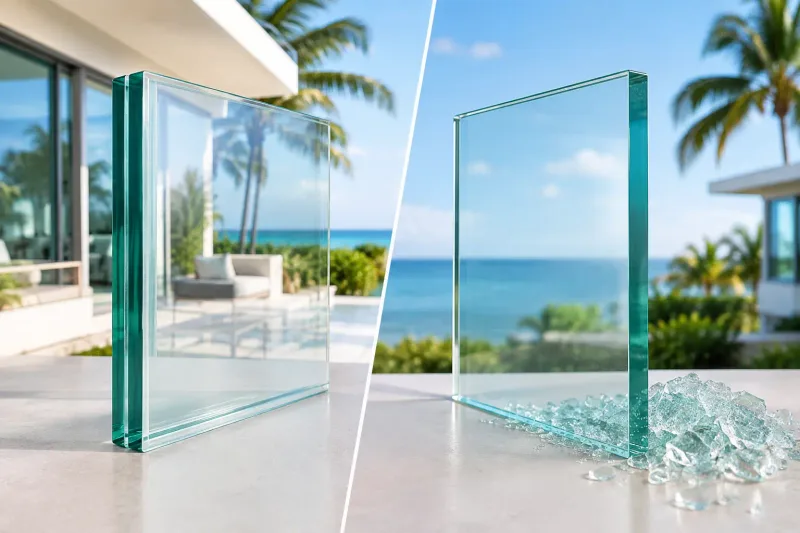
The strongest storefront solutions typically use laminated impact glass. A durable interlayer holds broken glass together after impact, helping reduce dangerous shards and limiting the opening created by a failure. Depending on the system and project requirements, insulating glass can also be incorporated to improve thermal performance and help control heat gain in sun-exposed elevations.
For many owners, that performance supports benefits well beyond storm preparation. Impact storefront glass can improve forced-entry resistance, reduce exterior noise, filter a portion of UV exposure, and create a more comfortable interior environment. Those benefits depend on the glass makeup, framing system, and orientation of the building, so they should be evaluated as part of the full design rather than assumed from an impact label alone.
Storefront, Curtain Wall, or Glass Door System?
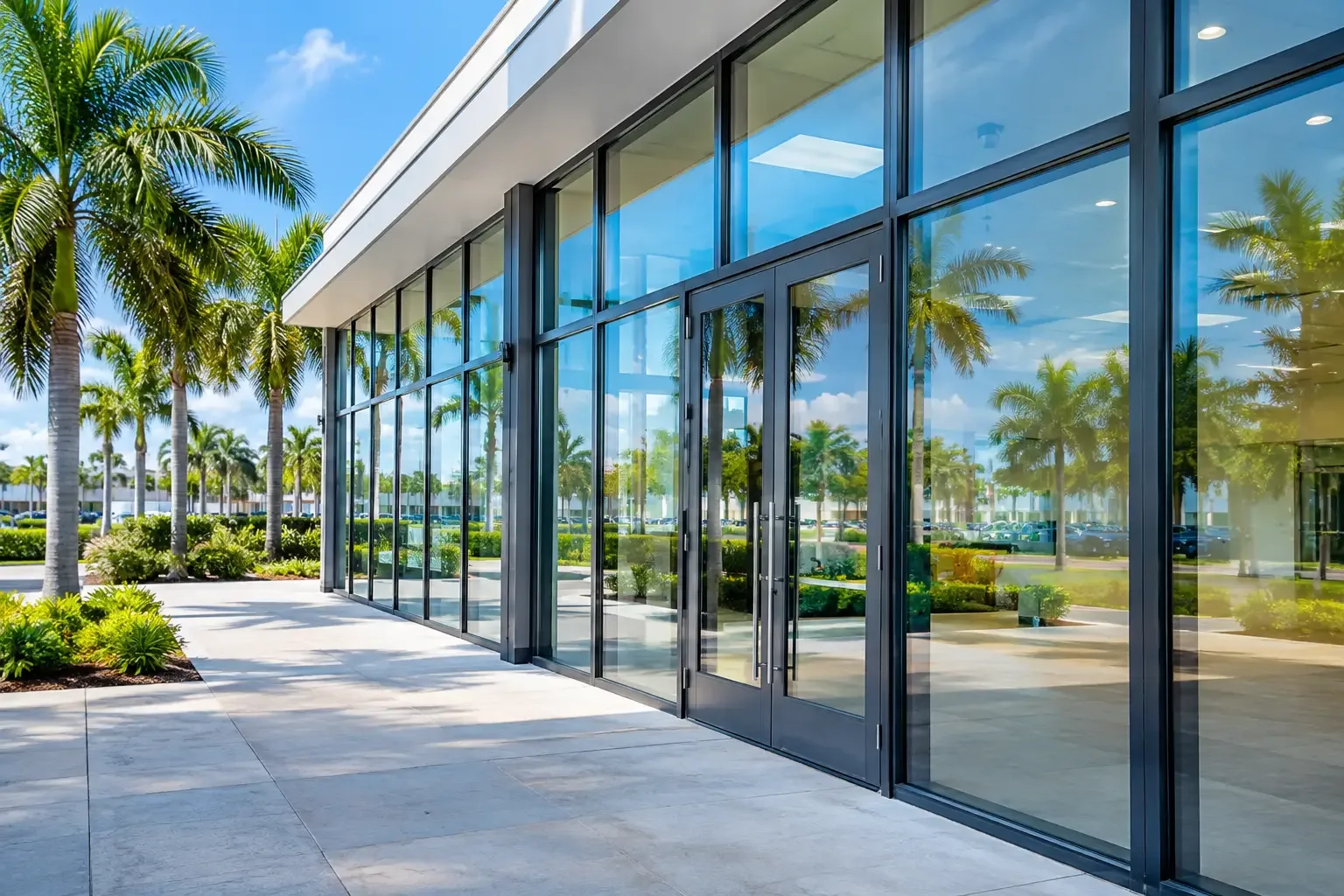
These terms are often used interchangeably, but they describe different applications. Storefront framing is commonly used at ground-level commercial openings and is generally installed between floor slabs or within a defined opening. It is an effective option for retail fronts, office entrances, interior lobby partitions, and smaller commercial façades.
Curtain wall systems are typically designed for larger, multi-story exterior elevations. They carry glass across floor lines and require more complex engineering, drainage design, and structural coordination. A property with broad expanses of glass may need curtain wall rather than storefront framing, even if the desired appearance is similar.
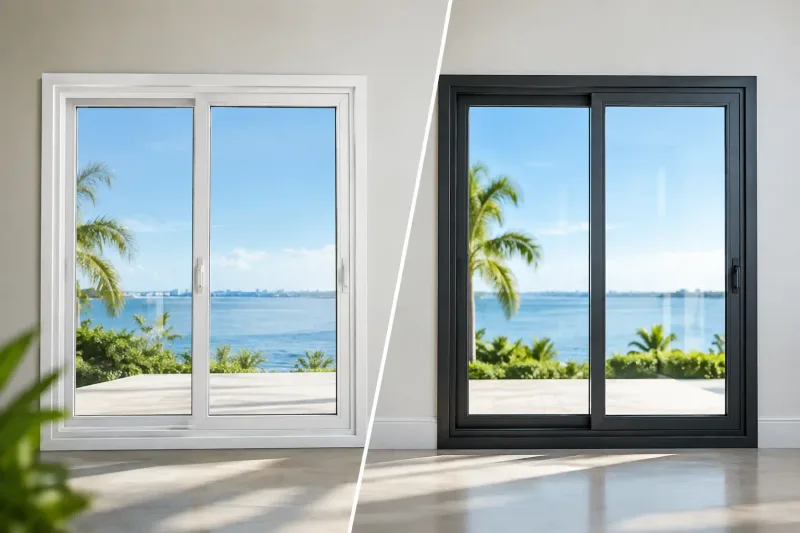
Entrance doors also need separate attention. A storefront can be built around swinging glass doors, aluminum-framed doors, or larger sliding and multi-panel systems. The door must carry ratings appropriate to its location and must be compatible with the surrounding framing. It should also meet practical demands, including daily traffic, accessibility, hardware durability, egress, and security.
The Glass and Frame Choices That Matter Most
Impact-rated laminated glass
For South Florida exterior storefronts, laminated impact glass is often the foundation of a hurricane-protection strategy. The appropriate glass thickness and interlayer are determined by the approved system, opening size, location, and required design pressures. Bigger panes are visually dramatic, but they also change the engineering requirements and may require heavier framing or additional mullions.
Do not compare glass specifications in isolation. Ask whether the proposed glass is approved within the exact storefront system being quoted and whether the approval applies to the planned dimensions. A product approval is not a blank check for every size, configuration, or exposure condition.
Thermally improved framing and insulated glass
South Florida heat places real demands on storefront glazing. Insulated glass units and thermally improved frame options can help reduce heat transfer and interior condensation concerns, especially in air-conditioned commercial spaces with substantial glass exposure. Low-E coatings can further manage solar heat gain while preserving daylight and the desired exterior appearance.
The trade-off is cost and complexity. Higher-performing glass packages may increase the initial investment, add weight, and affect available sizes or lead times. For a shaded storefront with modest glazing, a premium thermal package may offer a different return than it would on a west-facing façade that receives intense afternoon sun.
Aluminum framing and finish
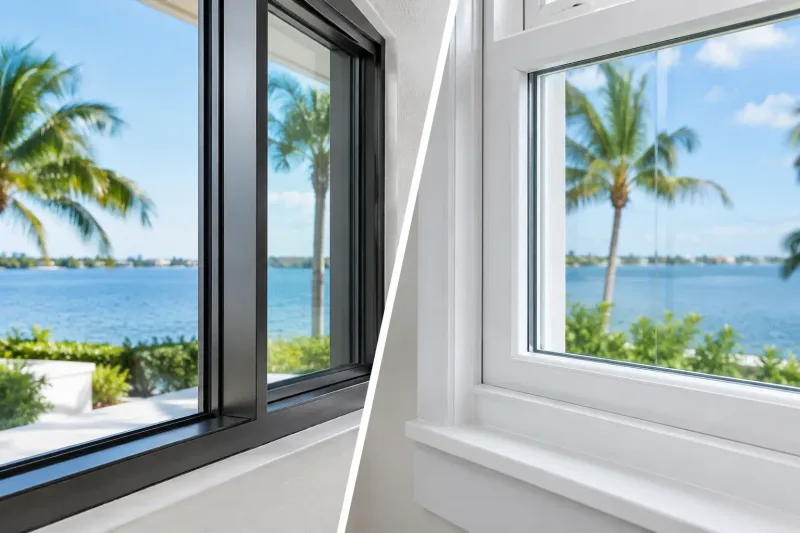
Commercial aluminum storefront framing is valued for its strength, clean sightlines, corrosion resistance, and design flexibility. Finish selection matters in coastal environments. Quality finishes and proper maintenance help preserve the appearance of frames exposed to salt air, rain, cleaning chemicals, and heavy use.
Narrow sightlines can create a refined, modern look, but they should never override required structural capacity. The best design balances glass area and aesthetics with wind pressure, panel size, anchorage, drainage, and the building's actual conditions.
Start With Florida Code and Project-Specific Pressures
Florida Building Code compliance is not a generic product feature. It is a project-specific process shaped by the property location, occupancy, opening dimensions, exposure, building height, and surrounding conditions. Miami-Dade-approved products are frequently requested because the approval process is rigorous, but the selected system must still be suitable for the application and installed according to its approval documents.
A responsible storefront evaluation should identify the required positive and negative design pressures for each opening. Negative pressure is particularly significant because it pulls glazing outward from the building. Corners, upper floors, and more exposed façades can experience different demands than protected interior courtyard locations.
Water management is equally important. Storefront systems use glazing pockets, weeps, gaskets, pressure bars, sealants, and flashing details to direct water away from the interior. If drainage paths are blocked or perimeter sealants are poorly executed, even quality framing can develop leaks. The installation plan should account for the existing substrate, transitions to adjacent walls, sill conditions, and any needed remediation before new glazing is installed.
Installation Is Part of the System, Not an Afterthought
The most expensive storefront glass can underperform when installation is rushed. Accurate field measurements, substrate inspection, proper shimming, approved anchors, correct fastener spacing, and precise sealant work all influence performance. So does coordination with the building's electrical, signage, flooring, drywall, and security systems.
For occupied commercial properties, installation planning also affects business continuity. A capable contractor can phase work to reduce disruption, secure the opening at the end of each workday, protect interior finishes, remove debris, and communicate clearly about access and scheduling. These details are not cosmetic. They protect the property and keep the project controlled from start to finish.
Permitting should be handled with the same discipline. Plans, product approvals, engineering when required, municipal submissions, inspections, and final closure need to align before work begins. Property managers and commercial owners should also confirm whether landlord requirements, association rules, or branded storefront standards apply.
How to Compare Storefront Glass Proposals
A low quote can be difficult to assess when one proposal lists only “impact glass storefront” and another provides detailed system information. The more useful comparison is not simply price per square foot. It is whether each contractor is proposing the same level of protection, glass package, framing series, hardware, engineering, permitting, and finish work.
Ask for the manufacturer and specific system series, the applicable product approval, proposed glass makeup, design pressure requirements, frame finish, door and hardware details, and who is responsible for permits and inspections. Clarify how existing glazing will be removed, how adjacent finishes will be protected, and what happens if hidden substrate damage is discovered.
Also look at accountability after installation. A storefront has moving doors, drainage components, seals, and glass that may need service over time. A contractor that manages the full scope can provide clearer responsibility than a fragmented arrangement involving separate glass, framing, and permit providers.
Choose Performance That Protects the Business
The best storefront glass system is the one engineered for the building, approved for its conditions, and installed with the same care used to select it. For South Florida property owners, that usually means prioritizing impact performance, code compliance, water resistance, energy considerations, and a professional installation process over the lowest initial number.
Before committing to a proposal, take the plans and approval documents seriously. A qualified team such as Avrax Impact Windows & Doors can help translate those technical details into a storefront that protects the people and assets behind the glass while presenting the polished appearance your property deserves.