Compare impact glass vs plexiglass for South Florida windows, storm doors, and enclosures. Learn which material meets hurricane code and why it matters.
A clear panel can look like a clear panel until hurricane-force debris hits it. That is why the impact glass vs plexiglass question deserves more than a quick comparison of thickness or price. For South Florida homes and commercial properties, the right choice must account for wind pressure, flying debris, Florida Building Code requirements, long-term exposure, security, and the performance of the complete window or door system.
Plexiglass can be useful in select applications. It is lightweight, more impact-resistant than standard annealed glass, and easy to fabricate. But it is not a like-for-like replacement for certified impact glass in exterior windows and doors. When your goal is permanent hurricane protection, code compliance, and a polished finished appearance, impact-rated glass systems are engineered for a fundamentally different job.
Impact Glass vs Plexiglass: The Core Difference
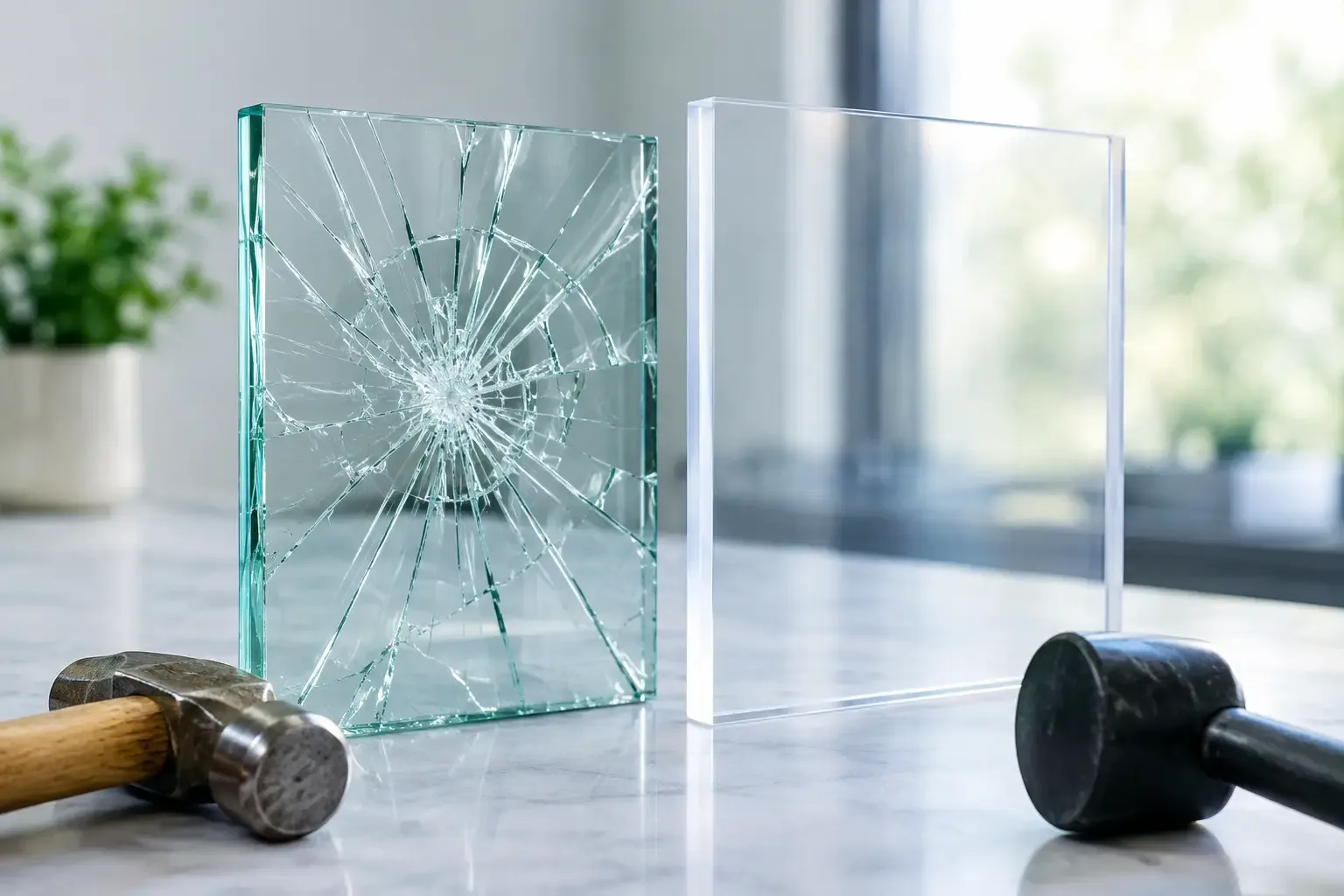
Impact glass is laminated safety glass built into a tested window or door assembly. It typically consists of two panes of glass bonded with a tough interlayer, often polyvinyl butyral or ionoplast. If debris strikes the glass hard enough to crack an exterior pane, the interlayer helps retain the broken glass and preserve the opening's protective barrier.
Plexiglass is a common name for acrylic sheet. Acrylic is a plastic material, not a laminated glazing system. It can absorb an impact without shattering as readily as ordinary glass, which makes it valuable for certain guards, covers, signs, and interior applications. Yet it may flex under load, scratch more easily, and perform differently over years of intense sun, salt air, cleaning, and temperature changes.
The distinction matters because hurricane protection is not measured by whether a material survives one hit. A compliant impact window or door must perform as a complete unit: glass, interlayer, frame, anchors, seals, hardware, and installation all have to work together under prescribed test conditions.
What Hurricane-Rated Impact Glass Is Designed to Do
In Miami-Dade and other high-velocity hurricane zones, approved impact products are tested for more than a single dramatic strike. Depending on the product approval and application, testing can involve large-missile impacts followed by repeated positive and negative pressure cycles. Those cycles simulate the changing forces that occur as a storm moves around a building.
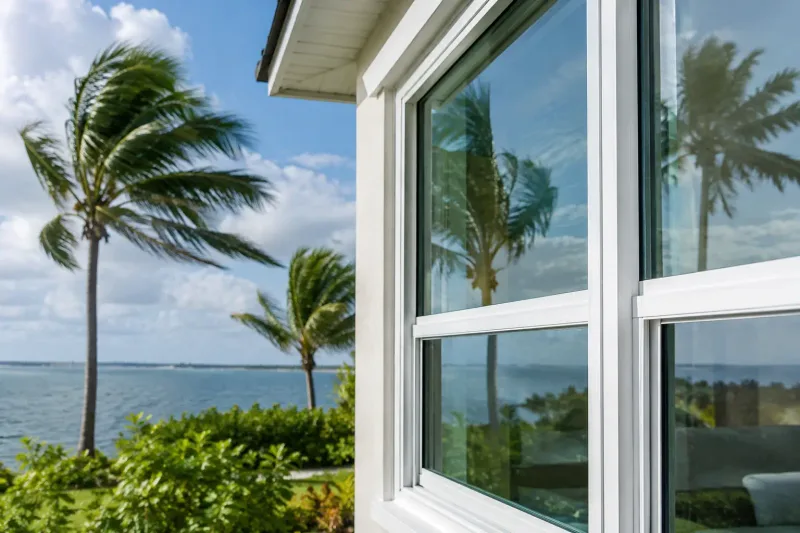
A properly specified impact window is designed to help keep the building envelope intact. That is critical. When an exterior opening fails during a hurricane, wind and rain can enter the structure, increasing internal pressure and causing extensive damage to finishes, contents, and potentially the roof system.
Impact glass also provides everyday advantages that matter long after storm season. The laminated interlayer creates an additional barrier against forced entry, filters a meaningful portion of UV exposure, and can reduce outside noise. Performance varies by glass package and frame selection, but homeowners often see a noticeable improvement in comfort when outdated single-pane windows and aging sliders are replaced with properly engineered systems.
It is worth being precise about storm ratings. No homeowner should assume that any glass labeled “impact resistant” offers the same protection. Product approvals, design-pressure ratings, opening size, building location, and installation details determine whether a specific unit is appropriate for a specific opening. “Category 5 protection” should be supported by the actual approved system and project requirements, not a generic material claim.
Where Plexiglass Can Make Sense
Plexiglass is not a poor material. It is simply suited to different priorities. Its low weight and workability can make it practical for temporary protective panels, interior partitions, display barriers, equipment guards, or specialty applications where code-required hurricane glazing is not the objective.
For example, a property owner may use acrylic for a small removable cover in a protected area or for an interior decorative feature. In those situations, clarity, weight, and ease of fabrication may be more important than long-term exterior glazing performance.
The limitations become clearer when acrylic is expected to serve as an exterior storm window. Plexiglass is prone to surface scratching from routine cleaning, windblown grit, and abrasion. It can also expand and contract more than glass, creating challenges around fastening, sealing, and long-term fit. Some sheets can yellow, haze, or develop surface wear over time, particularly when exposed to South Florida sun and weather.
Thickness alone does not solve those concerns. A thicker acrylic panel may be stronger in one respect, but it does not automatically provide the certified design-pressure, water-infiltration, structural, and impact performance required for a permitted exterior opening. It also does not turn a conventional frame into an impact-rated window.
Why the Complete System Matters More Than the Pane
One of the most expensive mistakes in hurricane protection is evaluating only the visible glazing. An impact window is a tested assembly, not just a piece of glass placed into an existing frame.
The frame must resist deflection. The glazing must stay retained. Hardware on operable windows and doors must function under pressure. Fasteners must be sized and spaced correctly for the substrate. Flashing, sealants, and perimeter details must manage wind-driven rain. Even a premium window can underperform if it is installed outside its approved conditions.
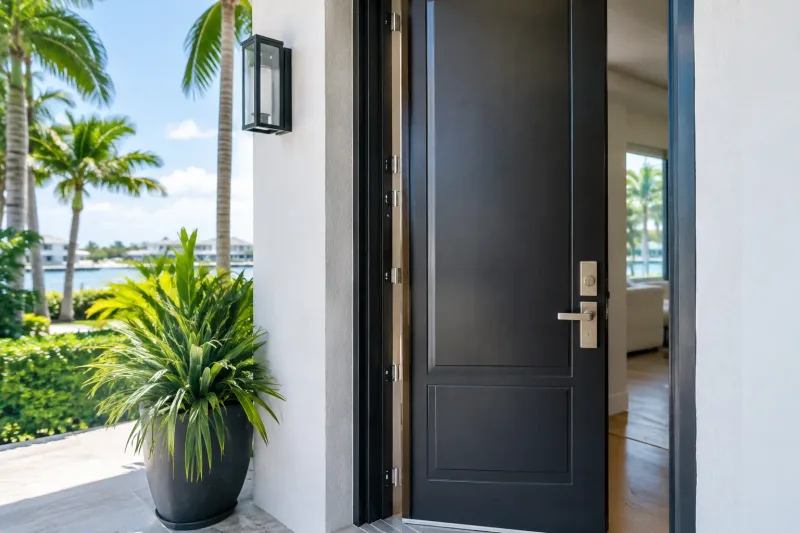
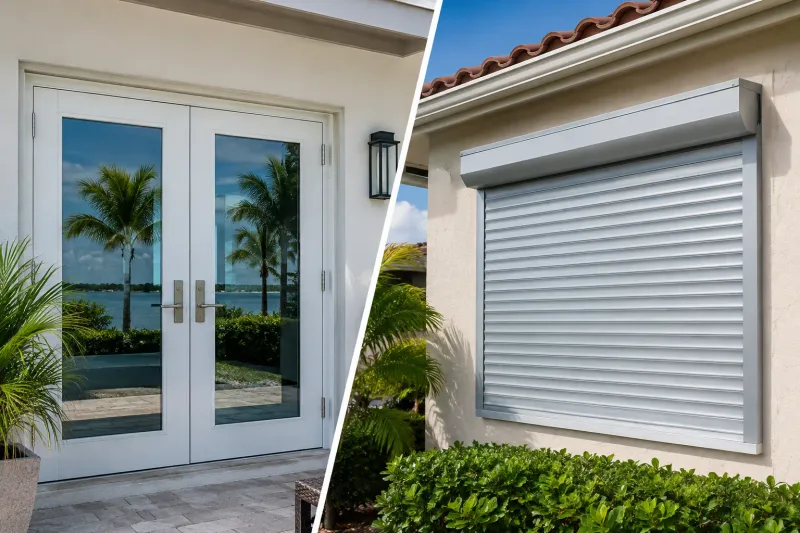
This is especially important for large openings such as sliding glass doors, French doors, storefront systems, and multi-panel configurations. Larger panels experience greater forces, and the engineering requirements can change based on elevation, exposure, opening dimensions, and the location of the property. A coastal high-rise, a waterfront home, and an inland single-story residence may each require different product selections.
A professional project begins with field verification rather than assumptions. The installer should evaluate the existing opening, wall condition, required approvals, egress needs, design pressures, and architectural goals before recommending a system. For communities with HOA requirements, product documentation and finish selections also need to be coordinated early to avoid preventable delays.
Cost, Appearance, and Long-Term Value
Plexiglass often appears less expensive at the point of purchase, particularly when comparing raw sheet material with a finished impact window. That comparison can be misleading. The real question is whether the material solves the full problem: hurricane readiness, permits, insurance considerations, security, energy performance, maintenance, and resale appeal.
Acrylic may be economical for a limited or temporary use. But replacing scratched or weathered panels, dealing with inadequate seals, or discovering that a solution cannot be permitted can erase the initial savings. It may also leave the property dependent on shutters or temporary protection when a permanent solution was the original goal.
Impact windows and doors require a larger investment because they are custom-manufactured, tested, approved, and professionally installed. In return, they can eliminate the annual burden of putting up panels, improve the exterior appearance of the property, and provide continuous protection even when an owner is away. They also support a cleaner architectural result than add-on temporary barriers.
For commercial properties, the value calculation includes continuity of operations and tenant protection. A code-compliant glazing upgrade can improve the building's appearance while helping protect interior assets, reduce noise, and address aging window systems in a coordinated way.
Choosing the Right Material for Your Property
If you need a lightweight clear panel for a non-hurricane application, plexiglass may be appropriate. If you are replacing exterior windows or doors in South Florida and expect the installation to provide permanent storm protection, the better path is a certified impact-rated system designed for the opening.
Ask for the specific product approval, not just a general statement that the glass is impact resistant. Confirm that the selected unit is appropriate for your building's required pressures and that the proposed installation follows the manufacturer's approved method. Permitting should be treated as part of the protection process, not an afterthought.
Avrax Impact Windows & Doors approaches these projects as complete exterior upgrades, from product selection and HOA coordination through permitting, installation, cleanup, and final completion. That full-project accountability matters because the best glazing package still depends on correct planning and execution.
The right decision is not about choosing the toughest-looking clear material. It is about choosing a tested, approved, professionally installed system that helps protect the people and property behind it when conditions are at their worst.