Compare impact doors versus shutters for South Florida homes. See how storm safety, security, design, permits, and daily use affect your best choice.
A hurricane warning is not the right time to discover that a shutter is missing, a track is jammed, or the door behind the protection is already vulnerable. When South Florida property owners compare impact doors versus shutters, the real question is not simply which option can meet code. It is which solution delivers the right level of protection, convenience, security, and long-term value for the way the property is used every day.
Both can be legitimate hurricane-protection strategies when they are properly engineered, approved, permitted, and installed. But they work very differently. An impact-rated door is a permanent protective system. Shutters are a deployable barrier placed over an existing opening. That distinction affects everything from storm preparation to curb appeal.
Impact Doors Versus Shutters: The Core Difference
Impact doors are built as complete tested assemblies. The glass, frame, hardware, reinforcement, anchoring, and installation method work together to resist wind pressure and impact from windborne debris. If the glass cracks after an impact, the laminated interlayer is designed to help hold it in place, preserving the building envelope rather than leaving a large opening exposed.
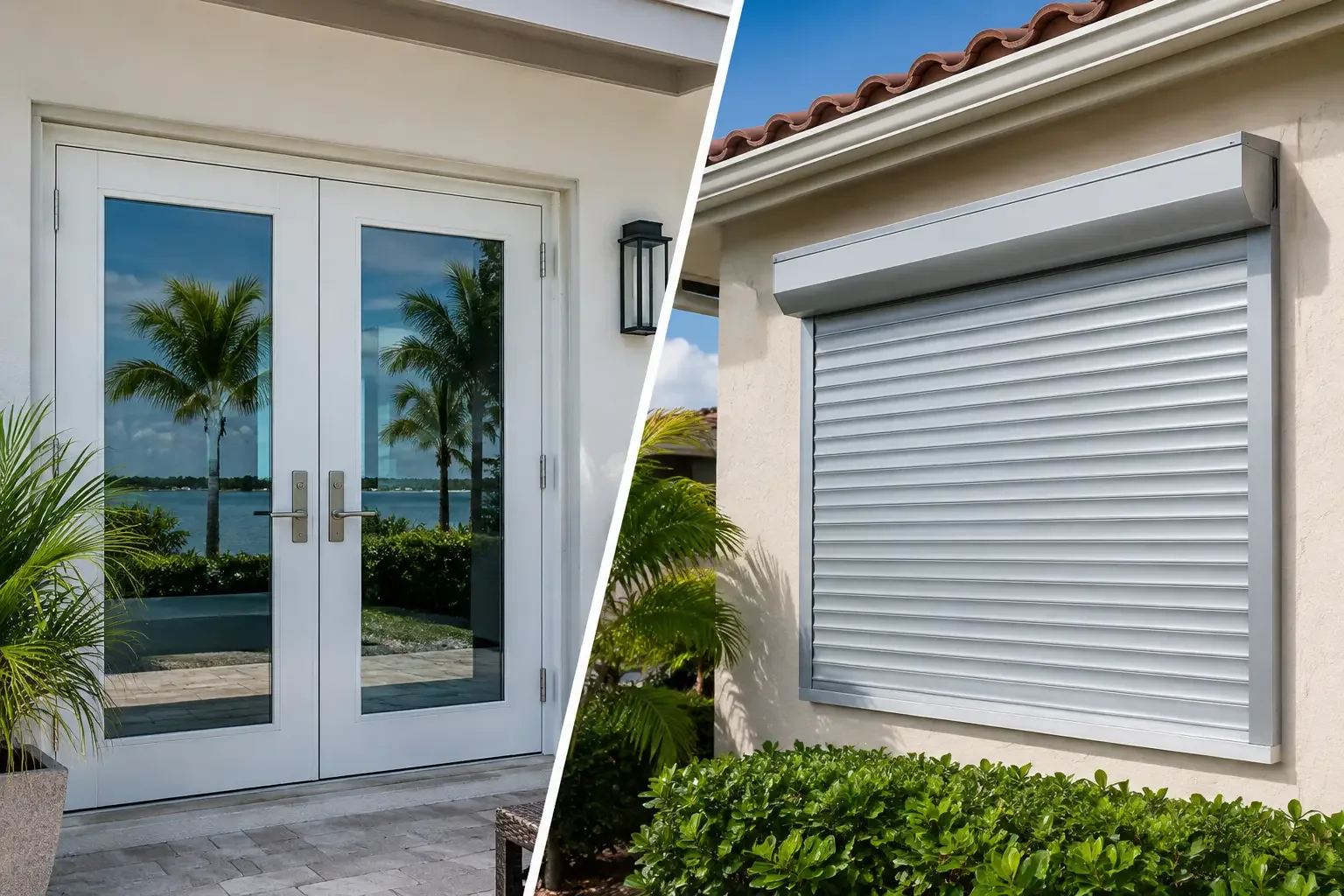
Hurricane shutters protect the exterior side of a door or glass opening. Options include accordion shutters, roll-down shutters, Bahama shutters, colonial shutters, and removable panel systems. A properly rated shutter system can provide effective storm protection, but it must be closed, secured, and maintained before conditions deteriorate.
For a home with conventional glass doors, approved shutters may be the most practical path to code compliance. For owners replacing an aging entry door, French door, or sliding glass door anyway, an impact-rated replacement can eliminate the need to deploy separate protection over that opening.
Storm Protection Is About More Than the Glass
During a hurricane, one breached opening can create a major pressure problem inside the structure. Wind entering through a broken door or window can increase internal pressure and place additional stress on the roof, walls, and other openings. The purpose of either impact glazing or an approved shutter system is to help prevent that breach.
Impact doors are ready at all times. There is no storage location to access, no panels to lift, and no last-minute installation schedule. This is a meaningful advantage for seasonal residents, older homeowners, busy families, and commercial properties that may not have personnel available to prepare every opening before a storm.
Shutters can provide strong protection, but readiness depends on action. Accordion and roll-down systems are generally faster to deploy than removable panels, yet they still require inspection and operation. Tracks can collect debris, fasteners can corrode, motors can fail, and storm preparation can become difficult when a property is vacant or an evacuation is already underway.
The best choice also depends on the specific product approval. A door or shutter should be selected based on the applicable Florida Building Code requirements, its approved design pressures, the opening size, exposure conditions, and the project location. Miami-Dade approval is a valuable benchmark for products used in high-velocity hurricane zones, but the complete installation must follow the approved details. A quality product cannot compensate for incorrect anchoring, unsuitable substrate conditions, or poor installation practices.
Everyday Security Favors Permanent Protection
Hurricanes are seasonal. Security concerns are not.
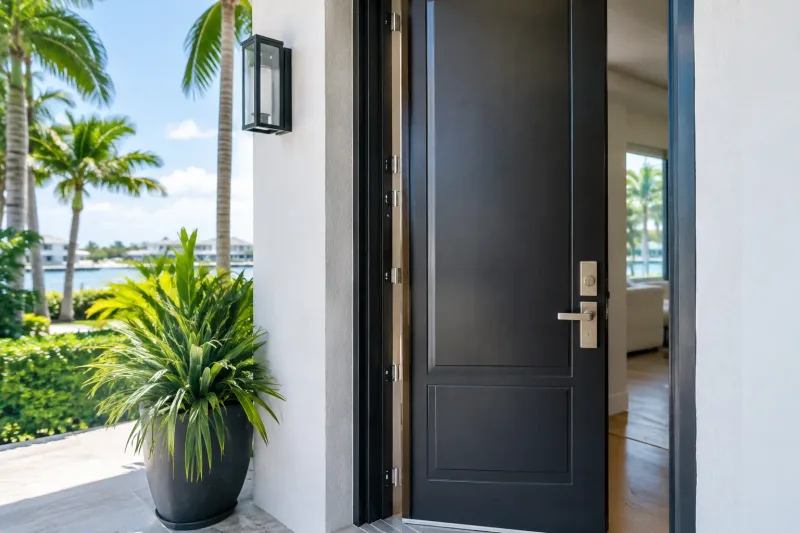
Impact-rated doors offer a year-round barrier because laminated glass and reinforced framing remain in place every day. They can make forced entry more difficult than conventional glass doors, helping protect the home whether the owners are inside, traveling, or away for the summer. This does not make a property invulnerable, but it adds a meaningful layer of resistance without requiring homeowners to close off their views or access points.
Shutters can add security when closed, particularly heavy-duty roll-down systems. The trade-off is that closed shutters can darken interior spaces, limit visibility, and make the property feel shut down. Most homeowners do not keep them closed as a daily security measure, especially across patio doors and primary living areas.
For a front entry or a large rear sliding glass opening, impact doors preserve natural light and normal use while maintaining protection. That is one reason many South Florida owners see them as both a safety upgrade and a lifestyle upgrade.
Appearance and Daily Function Matter
Shutters are visible architectural features. Some homeowners like the traditional look of Bahama or colonial shutters, while others prefer the practical coverage of accordion shutters. On the other hand, bulky tracks, stacked accordion panels, and removable-panel fasteners can affect the appearance of the exterior when no storm is approaching.
Impact doors provide more flexibility in glass, frame finish, configuration, and sightlines. Homeowners can choose from reinforced entry doors, French doors, hinged patio doors, and multi-panel sliding glass systems designed around the architecture of the home. Large openings can remain bright and visually open without storing panels in a garage or changing the exterior profile with permanent shutter hardware.
Function deserves close attention, especially for doors used as primary exits. A patio slider should glide reliably. A French door should close and lock smoothly. An entry door should provide the security, privacy, and curb appeal expected from a front entrance. When comparing products, operate the door, inspect the hardware, and ask how the system will perform after years of daily use.
Cost Depends on the Starting Point
There is no universal answer to which option costs less. Shutters often have a lower initial cost when the existing door is in good condition and the goal is limited to storm coverage. They can be a sensible choice for secondary openings, detached structures, or properties where a full door replacement is not yet necessary.
Impact doors typically require a larger upfront investment because they replace the full assembly. The project may include removal of the existing unit, framing preparation, waterproofing, new anchoring, finish work, permits, and installation. For a door that is leaking, outdated, difficult to operate, poorly secured, or visually worn, those costs should be evaluated against the expense of maintaining the old door and adding shutters over it.
The value calculation also extends beyond storm season. Impact doors can improve energy efficiency by reducing heat transfer and air leakage when properly selected and installed. Laminated glass can also reduce outside noise, which is valuable near busy roads, airports, and active neighborhoods. Depending on the policy and carrier, qualifying protection upgrades may support insurance discounts, but homeowners should confirm eligibility directly with their insurer rather than assume savings.
Permits, HOA Rules, and Installation Are Part of the Decision
A hurricane-protection project is not just a product purchase. Local permitting requirements, wind-load calculations, product approvals, inspections, HOA guidelines, and installation details can all affect the final scope.
Shutter projects may require permits and approved attachment methods. Impact-door replacements also require careful attention to opening conditions, structural anchoring, water management, and code-compliant egress. If a shutter covers a required exit, the system must not compromise safe escape or emergency access.
For condominiums and HOA communities, exterior color, profile, visibility, and operating style may also need approval before work begins. A professional contractor should help coordinate these details, verify measurements, present appropriate product options, and manage the process through final inspection and permit closure.
When Shutters Are the Better Choice
Shutters remain a smart solution in several situations. They may be the right fit when an existing door is relatively new, in excellent condition, and already meets the owner's daily performance expectations. They can also make sense for a limited budget, for openings that are rarely used, or for owners who prefer a specific shutter style.
The key is to choose an approved system and commit to regular maintenance and storm preparation. Homeowners should know who will deploy the shutters, how long it takes, where removable components are stored, and whether every fastener and track is still functional before hurricane season starts.
When Impact Doors Are Worth the Investment
Impact doors are often the stronger long-term option when a current door has deteriorated, when the home relies heavily on glass for light and views, or when the owners want permanent protection without deployment. They are especially compelling for entry doors, patio doors, French doors, and wide sliding systems that are difficult to cover quickly with panels.
They are also a practical choice for owners who want one upgrade to address hurricane resistance, security, energy performance, noise reduction, and design. The project should begin with an on-site evaluation, not a generic price comparison. Opening size, wall construction, exposure, door use, aesthetic goals, and budget all influence the proper system.
For South Florida homes, the best decision is usually the one that protects the building before the forecast turns serious and still improves the property on an ordinary Tuesday. A careful consultation with a qualified impact-door contractor can turn that decision into a clear, code-compliant plan that protects your family and respects your investment.