Learn how to choose impact windows for South Florida homes, from Miami-Dade approvals and glass options to installation, permits, and lasting value today.
A window can look substantial in a showroom and still be the wrong choice for your home. The difference often comes down to approved performance, correct sizing, and installation details that are not visible once the trim is complete. Knowing how to choose impact windows means looking beyond frame color and price to confirm that the system will protect your family, meet local requirements, and perform for decades in South Florida’s heat, rain, salt air, and hurricane conditions.
How to Choose Impact Windows: Start With Your Property
There is no single “best” impact window for every property. A coastal condominium, a single-family home in Miami-Dade, and a commercial storefront in Broward can face different wind pressures, exposure conditions, architectural restrictions, and operating needs.
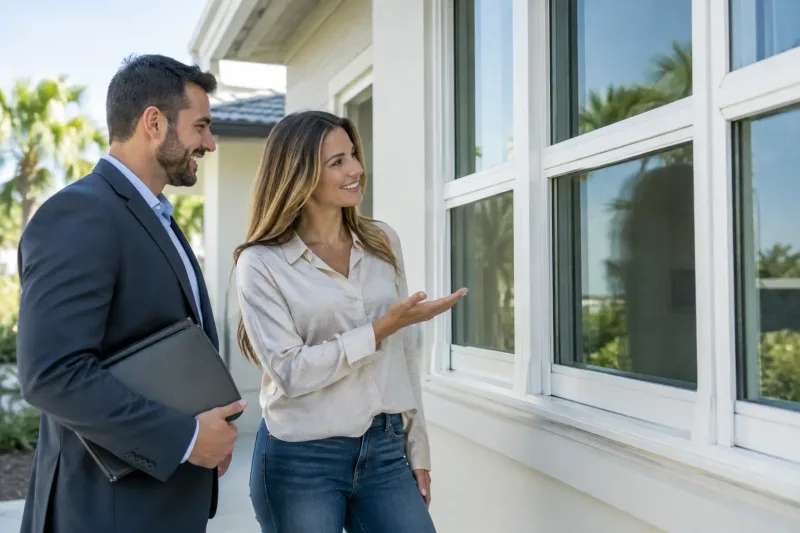
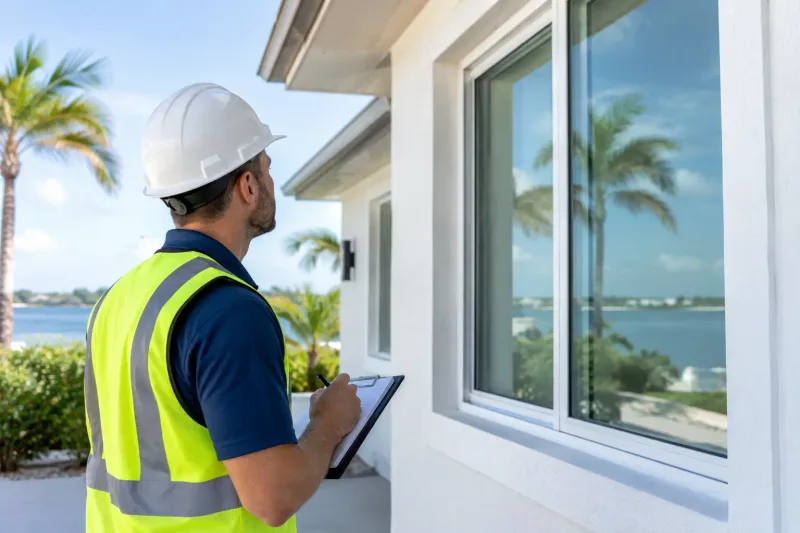
Start with the openings you have now. Measure is only one part of the equation. A qualified contractor should assess the opening condition, wall construction, sill details, water-management path, and whether the existing windows can be removed without damaging surrounding finishes. Older homes may have concrete block construction, wood buck requirements, aging stucco, or nonstandard opening sizes that affect the scope of work.
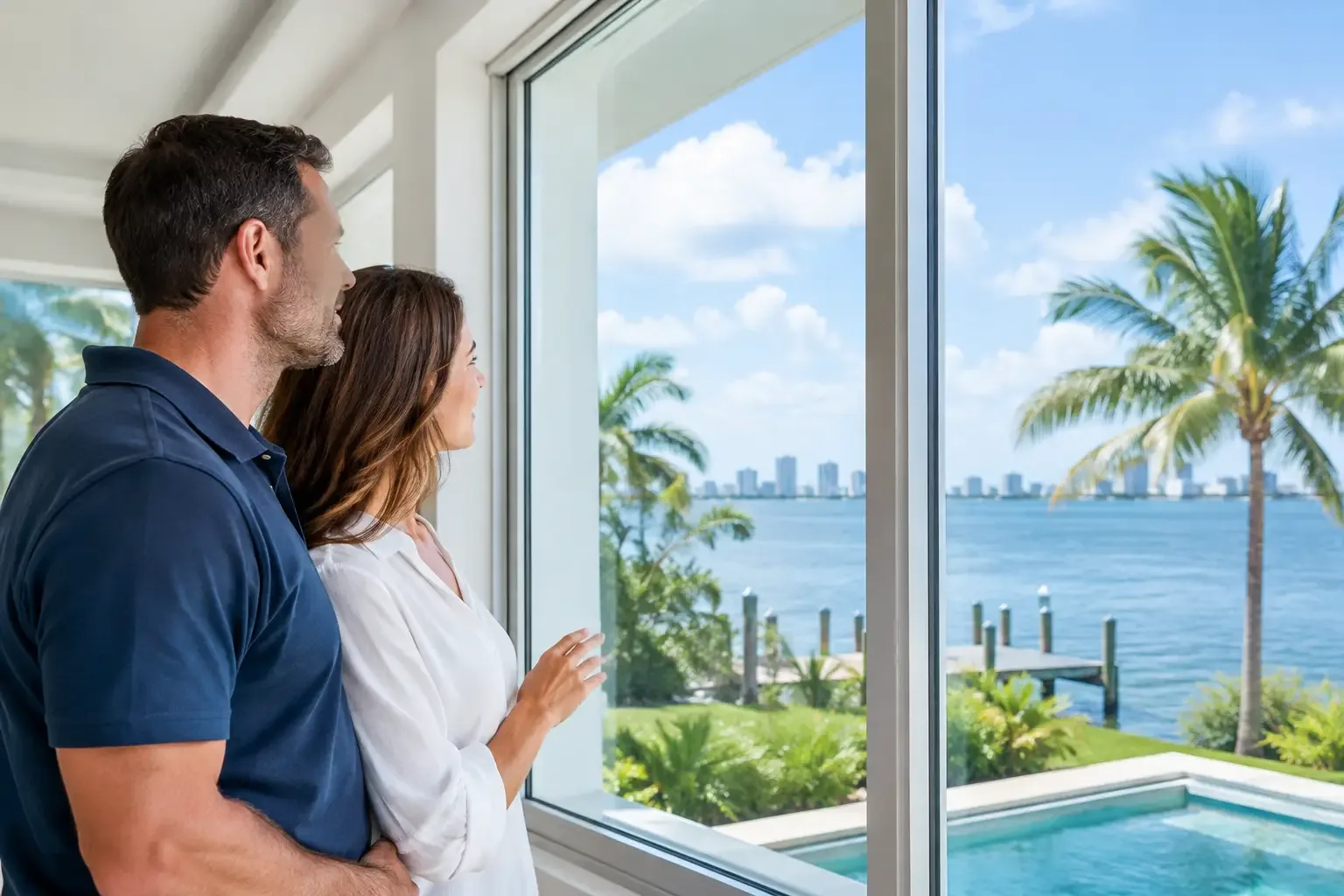
Also consider how you use each room. A large fixed picture window can provide broad views and strong daylight, but it does not offer ventilation. Casement windows can deliver excellent airflow and a tight seal when closed. Single-hung and horizontal roller windows may suit more traditional layouts, while awning windows work well where ventilation is wanted during light rain. The right configuration should support the room before it supports a design trend.
For sliding glass doors, think about panel size, daily traffic, threshold accessibility, screen options, and how much clear opening you need. A multi-panel system may transform a rear elevation, but it also requires careful engineering, proper structural support, and a product rated for that exact application.
Confirm Miami-Dade Approval and Required Design Pressures
In South Florida, impact protection is not a general claim. It must be supported by tested, approved products and correct installation. Miami-Dade County product approvals are among the most recognized standards for high-velocity hurricane zone applications. Many projects also require compliance with the Florida Building Code and local municipal requirements.
Ask to see the product approval associated with the exact window or door series being proposed. The approval should match the configuration, glass type, frame, size, and installation method. A manufacturer may offer an approved impact product line, but that does not mean every size or arrangement within the line is approved for every opening.
Design pressure is equally important. This rating reflects the amount of positive and negative wind pressure a window system can withstand. Larger openings, upper floors, corner exposures, and homes near the coast may require higher design pressures than smaller, more protected openings. Your contractor should determine the required pressures based on the building, location, opening dimensions, and applicable code, not simply recommend one rating for the entire house.
This is where lower quotes can become misleading. Two proposals may both say “impact windows,” yet include different approved sizes, glass builds, frame systems, installation details, or performance ratings. Compare the documentation as carefully as the price.
Impact Glass Is a System, Not Just Strong Glass
Impact windows use laminated glass, typically made with two panes bonded by a durable interlayer. If the exterior glass breaks during an impact event, that interlayer helps hold the glass together and preserves the building envelope. The frame, glazing, locks, fasteners, anchors, and installation method must all work together as one tested system.
Do not assume thicker glass is automatically better for your home. Glass selection depends on required pressure, opening size, acoustic goals, energy performance, visibility, tint preferences, and local code. A professional recommendation should explain why a particular glass package is being specified rather than relying on a vague promise of “hurricane glass.”
Choose a Frame Material and Style That Fit the Environment
Aluminum and vinyl are both common choices in impact-rated windows, and each involves trade-offs. Aluminum frames offer strength, slim sightlines, and a clean contemporary appearance. They are widely used for larger openings and can be an excellent choice when properly engineered and finished for South Florida conditions.
Vinyl frames can offer strong thermal performance and may appeal to homeowners who want a different aesthetic or lower heat transfer. However, available sizes, colors, sightlines, and structural capabilities vary by manufacturer and product series. The best choice depends on the design of the home, the required performance, and the size of the opening.
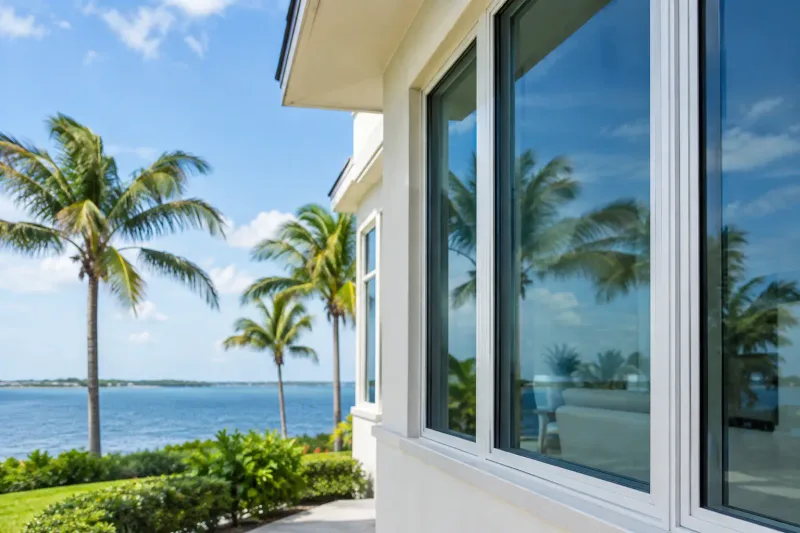
Finish matters as well. Dark exterior frames are popular, but South Florida sun places real demands on any finish. Ask about available colors, coating quality, maintenance needs, and whether the selected finish is appropriate for your environment. If you live close to the ocean, salt-air exposure should be part of the conversation, particularly for hardware and exterior components.
Aesthetics should be deliberate. Frame profiles, divided-lite patterns, grille placement, glass tint, and window operation can either reinforce the architecture or work against it. A traditional home may benefit from a different visual approach than a modern waterfront residence. The goal is not to make every opening identical. It is to make the full elevation feel considered.
Evaluate Energy, Noise, and Security Benefits Honestly
Impact windows can improve comfort well beyond storm season. Laminated glass and tighter window assemblies can reduce outside noise, limit UV exposure, and help make indoor temperatures more consistent. These benefits vary by glass package, orientation, shading, and the condition of the rest of the building envelope.
For energy performance, review measures such as U-factor and Solar Heat Gain Coefficient. Lower values are not universally better without context. West- and south-facing glass may benefit from a solar-control package that reduces heat gain, while heavily shaded openings may have different priorities. Visible light transmission also matters if you want bright interiors without excessive glare.
Security is another meaningful benefit. Impact-rated laminated glass is more difficult to penetrate than conventional glass, and reinforced frames and locking hardware add another layer of resistance. Still, no window should be represented as impossible to breach. The practical advantage is greater delay, stronger deterrence, and more protection for the opening than standard non-impact glazing.
Make Installation Quality Part of the Product Decision
A premium window installed incorrectly is not a premium result. Proper installation affects water resistance, wind performance, operation, finish quality, and whether the final system meets the approved installation requirements.
Ask who will perform the work, whether crews are trained and certified for the products being installed, and how the contractor handles site protection, removal, debris, and final adjustments. You should also understand what happens if concealed damage or deteriorated substrate is discovered after the old units are removed. Renovation work can reveal conditions that were impossible to see during an initial walkthrough, and a responsible contractor will explain the process before work begins.
Pay attention to anchoring and waterproofing details. The approved anchor type, spacing, embedment, sealants, and perimeter treatment are not minor technicalities. They are central to how the window resists wind and manages water. Interior and exterior finishes should be completed cleanly, but appearance must never come at the expense of the approved installation method.
Account for Permits, HOA Rules, and the Full Project Scope
Window replacement in South Florida commonly requires permitting, and condominium or HOA communities may require separate architectural approval. These steps can affect product color, grille pattern, installation timing, documentation, and access procedures. They should be addressed before materials are ordered.
A complete proposal should make the scope clear: product series, glass package, quantities, opening types, permit responsibility, removal and disposal, installation, finish work, cleanup, and warranty coverage. If doors are included, verify whether new thresholds, structural modifications, screens, hardware, or locksets are part of the price.
For commercial properties, the review should go further. Occupancy, storefront design, accessibility, phased installation, tenant disruption, and project scheduling can all affect the correct product and execution plan. The lowest initial price may not be the lowest operational cost if it creates avoidable downtime or requires corrections later.
Compare Proposals Line by Line
When you receive multiple estimates, compare equivalent items rather than total numbers alone. A meaningful comparison includes the manufacturer and series, approved glass configuration, frame material and finish, performance rating, installation method, permit handling, warranty terms, and any exclusions.
Financing can make a larger project more manageable, but it should not push you into a decision before the specifications are clear. First select the right level of protection and performance for the property. Then evaluate the payment structure that fits your budget.
Choose a Contractor Who Owns the Details
Impact window replacement is a building-envelope project, not a simple retail purchase. The contractor should be able to explain the product approval, design pressures, permitting path, installation plan, and expected timeline in straightforward terms. Clear communication matters just as much as technical knowledge when your home is open during construction.
Avrax Impact Windows & Doors manages product selection, permits, HOA coordination, installation, cleanup, and project completion so homeowners can move through a complex upgrade with one accountable team. Whether you are replacing aging aluminum windows, hurricane panels, or a dated sliding door, the right decision begins with a detailed evaluation of the actual property.
Choose impact windows with the same care you would use for any permanent safety investment: verify the rating, understand the installation, and insist on a system designed for your opening rather than a one-size-fits-all quote. That diligence pays off when the forecast changes, the house gets quieter, and every window looks and works the way it should.