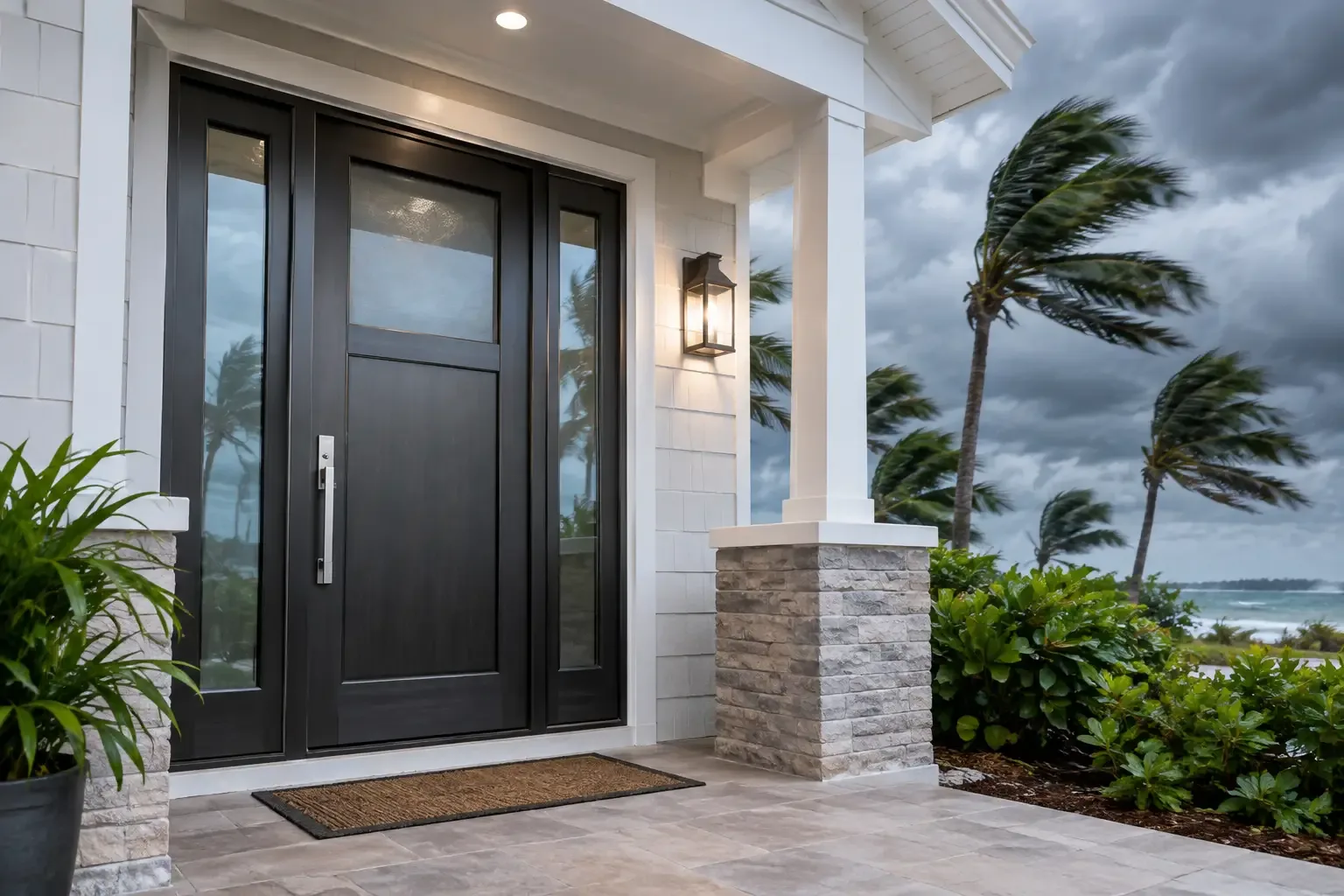
Hurricane proof entry doors help protect South Florida homes from wind, debris, water intrusion, and break-ins while meeting strict local code requirements.
A front door is more than curb appeal when a hurricane warning is posted. Hurricane proof entry doors are designed to help keep the building envelope intact when high winds and flying debris put conventional doors at risk. For South Florida property owners, the right door can protect the people inside, reduce water exposure, improve security year-round, and replace the hassle of storing and installing temporary panels.
The phrase “hurricane proof” is commonly used, but it deserves a clear explanation. No door can guarantee zero damage in every storm scenario. What homeowners should look for is an impact-rated entry door system that has been tested and approved for the design pressures, wind zones, and code requirements that apply to their property. The door, frame, glass, hardware, anchoring, and installation all work together.
What Makes a Hurricane Proof Entry Door Different?
A conventional entry door may look substantial, yet it is often not engineered to withstand repeated pressure changes, missile impacts, and uplift forces created by a major hurricane. If the door or its glass fails, wind can enter the home. That internal pressure may increase the load on the roof, walls, windows, and other openings.
Impact-rated entry doors are built as tested assemblies. Depending on the product configuration, they may include reinforced aluminum, fiberglass, or steel construction; laminated impact glass; heavy-duty hinges; multi-point locking hardware; reinforced frames; and specified anchoring systems. Laminated glass is particularly valuable because its interlayer is designed to hold broken glass together after impact rather than leaving an open breach.
That distinction matters. A beautiful door with decorative glass is not automatically hurricane-rated. Likewise, an impact glass panel alone does not make an entire door compliant. The approved product must match the opening, installation method, exposure conditions, and applicable Florida Building Code requirements.
The Door Is Only as Strong as Its Installation
Even a premium, Miami-Dade-approved door can underperform if it is measured incorrectly, fitted into a compromised opening, or anchored outside its tested specifications. Installation is not a finishing detail. It is part of the protection system.
A qualified contractor evaluates the existing opening, wall condition, sill, framing, elevation, and attachment requirements before installation begins. The team must also address proper flashing, sealants, water management, and finishing work. These details help prevent wind-driven rain from finding a path around the frame after the storm shutters are no longer part of the plan.
For properties with homeowners associations, historic requirements, or complex permitting needs, early coordination can prevent expensive revisions later. A full-service project should account for product approvals, permits, HOA documentation, removal of the old unit, installation, cleanup, and final permit closure.
How Impact Entry Doors Protect Your Property
The immediate benefit is storm protection, but impact entry doors earn their value long after hurricane season. They create a permanent layer of defense at one of the most frequently used openings in the home or business.
First, they help resist windborne debris. In a major storm, roof tiles, branches, outdoor furniture, and construction materials can become high-speed projectiles. Impact-rated glass and reinforced door systems are tested to withstand defined impact and pressure conditions without creating an unprotected opening.
Second, they improve day-to-day security. Laminated impact glass is more difficult to breach than standard glass, and reinforced frames and locking systems add another layer of resistance. This does not replace sensible security practices, but it can make forced entry more difficult and more time-consuming.
Third, a properly specified door can improve comfort. Older entry systems often allow heat, outside noise, and humid air to enter around worn weatherstripping or poorly sealed frames. Modern impact doors can reduce air infiltration and outside noise while helping the air-conditioning system maintain a more consistent indoor temperature.
Finally, the right design improves the property’s appearance. Homeowners no longer have to choose between security and style. Contemporary glass patterns, sidelites, transoms, wood-grain finishes, sleek aluminum profiles, and custom colors can create an entry that fits a coastal home, a traditional residence, or a commercial facade.
Choosing Hurricane Proof Entry Doors for a South Florida Home
The best option depends on the opening, the property location, and how the door will be used. A single front entry door has different needs than a double-door foyer, a glass-heavy pivot entry, or a commercial entrance with continuous daily traffic.
Start with the required approvals and ratings. In South Florida, homeowners should verify that the proposed system is approved for the applicable jurisdiction and meets the project’s design pressure requirements. Miami-Dade product approvals are widely recognized for their stringent standards, but approval numbers must still correspond to the exact product, size, glass option, hardware, and installation details being proposed.
Next, consider the material. Aluminum doors offer clean sightlines, strength, and low-maintenance performance, making them a strong fit for many modern South Florida homes. Fiberglass can provide insulation and the look of painted or stained wood. Steel may be appropriate for certain secure, solid-panel applications, although coastal conditions and maintenance requirements should be considered carefully.
Glass selection also deserves attention. Clear impact glass maximizes daylight, while obscure, tinted, textured, or decorative options can add privacy and character. Sidelites and transoms bring more natural light into an entryway, but they must be designed as part of a coordinated, impact-rated system. Adding non-rated decorative components can undermine an otherwise compliant upgrade.
Do You Need a Category 5-Rated Door?
Category 5 protection is a meaningful goal for many South Florida homeowners, but the answer is not simply a label on a brochure. Hurricane categories describe storm intensity, while door performance is evaluated through product testing, design pressure ratings, impact standards, and installation requirements.
A professional consultation should translate your property’s needs into a compliant system. Coastal exposure, building height, location, opening size, and whether the property is in a high-velocity hurricane zone can all affect the required specification. The goal is not to overbuy a feature that does not apply to your home, nor to install a door that falls short of local code and practical risk.
Warning Signs It Is Time to Replace Your Entry Door
An aging entry door often gives clear signs before it becomes a serious concern. You may notice daylight around the frame, visible corrosion, soft or damaged material near the sill, water staining, drafts, rattling during strong winds, or locks that no longer engage smoothly. Fogging between glass panes and cracks in decorative inserts also deserve immediate attention.
Older double doors can be especially vulnerable when astragals, hinges, thresholds, or locking points have worn down. A door that has shifted over time may no longer close squarely, even if it still appears acceptable from the street. During a storm, small gaps and weak points can become costly pathways for wind-driven water.
Replacement is also worth considering when homeowners rely on removable panels for a front entry with glass. Panels can provide a level of protection when installed correctly, but they require storage, labor, and advance preparation before every storm. A permanent impact-rated door eliminates that last-minute task while improving security and appearance every day of the year.
What to Expect From a Professional Door Project
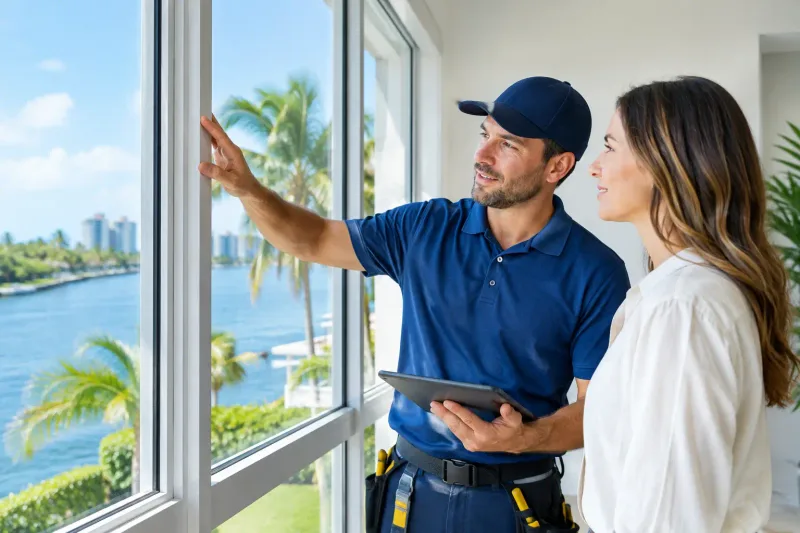
A quality entry-door replacement begins with an on-site evaluation, not a generic estimate. The contractor should inspect the opening, discuss your design preferences, explain available impact ratings, and provide a clear scope of work. Measurements must be exact, particularly for custom doors, sidelites, and transoms.
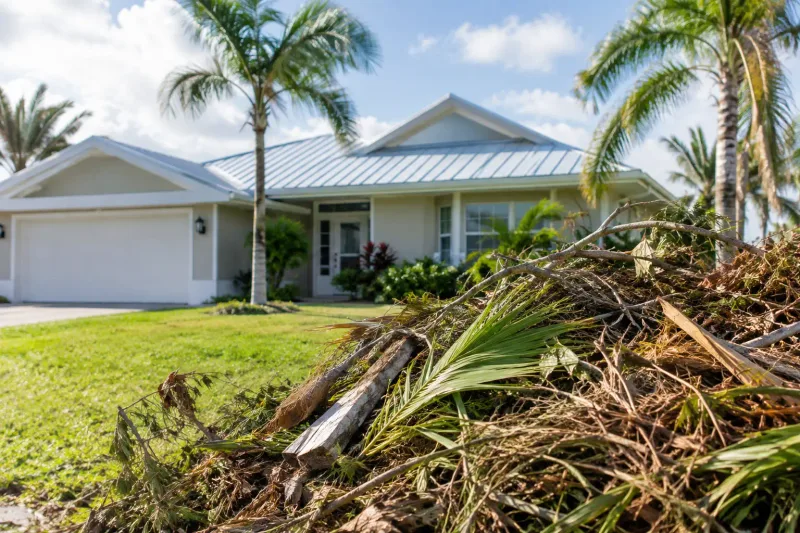
Once the product is selected, the project moves through approvals, permitting, ordering, scheduling, and installation. Lead times can vary with custom finishes, specialty glass, and manufacturer production schedules, so homeowners should avoid waiting until a named storm is approaching. Hurricane season is the wrong time to begin a project that requires engineering, permits, and custom fabrication.
During installation, experienced crews remove the existing door carefully, prepare the opening, set and secure the new system according to approved details, seal the perimeter, test operation, and leave the work area clean. Final inspections and permit closure provide documentation that the upgrade was completed to code.
Avrax Impact Windows & Doors approaches the process as a complete exterior-protection project, helping South Florida property owners coordinate selection, approvals, installation, and final completion without leaving critical steps to chance.
A hurricane-rated entry door should feel solid when you close it, look right when you arrive home, and give you greater confidence when the forecast changes. The most dependable result comes from selecting a tested system that fits your property and having it installed with the same care used to manufacture it.