Security glass helps South Florida properties resist forced entry, windborne debris, noise, and UV exposure with expert specification and installation.
A pane of ordinary glass can become the weakest point in a home within seconds. Security glass is designed to change that equation, helping South Florida homeowners protect openings that are vulnerable to forced entry, windborne debris, harsh weather, and everyday wear. The right system can also improve comfort, reduce outside noise, and preserve the clean architectural look of a property.
For homes and commercial properties in hurricane-prone areas, however, not every product described as “security glass” provides the same protection. Glass type, frame strength, anchoring, testing approvals, and installation quality all determine how the completed opening performs when conditions become serious.
What Security Glass Is Designed to Do
Security glass is a broad term for glazing engineered to resist breakage, penetration, or both. It may use laminated glass, tempered glass, insulating glass units, specialty interlayers, or combinations of these components. The best choice depends on the threat a property needs to address.
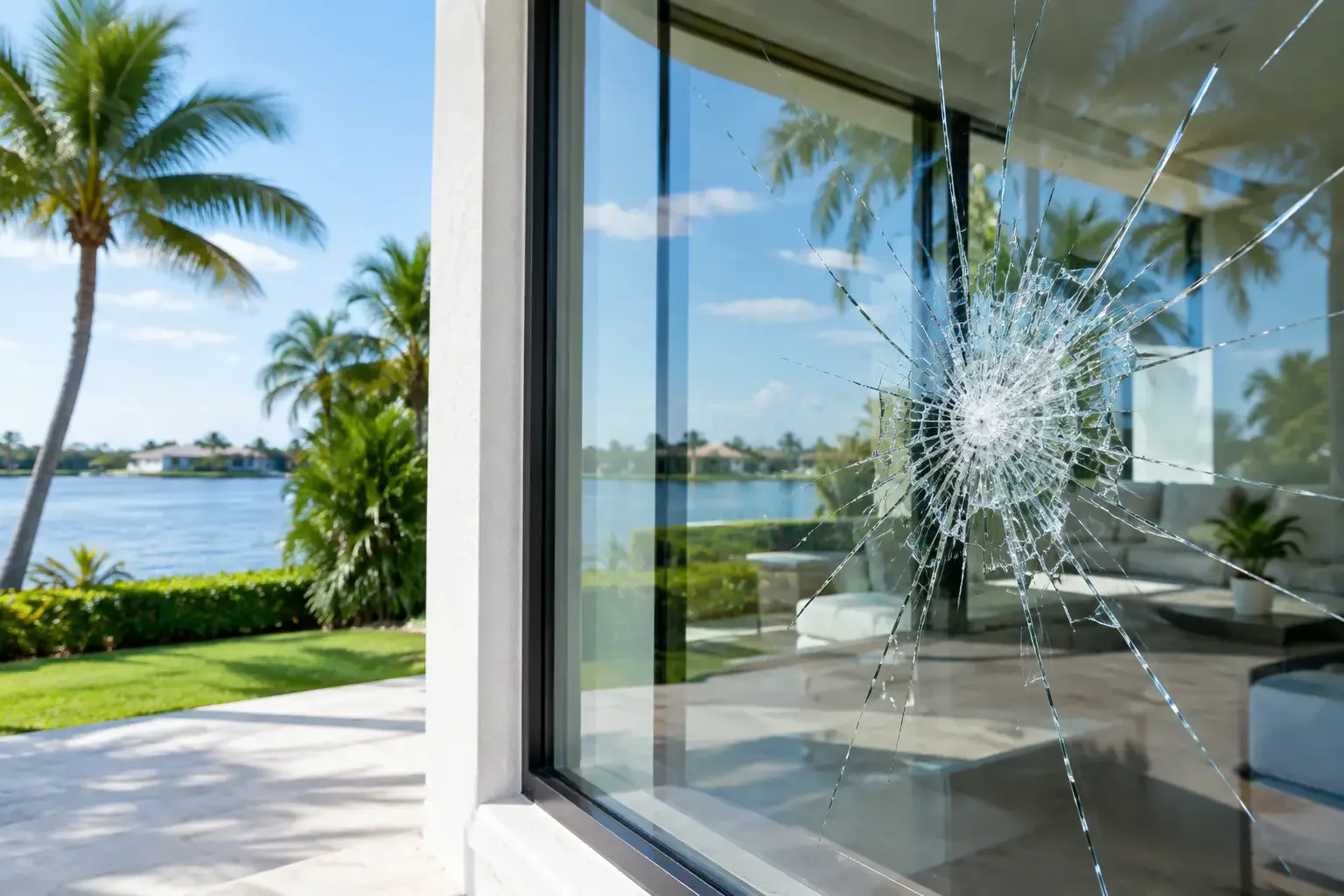
Laminated glass is central to many high-performance impact window and door systems. It uses two or more panes bonded with a durable interlayer. If the exterior glass cracks after an impact, the interlayer helps hold the broken pieces together and keeps the opening covered. That retained barrier is what makes laminated impact glass fundamentally different from ordinary annealed glass.
Tempered glass is heat-treated to be stronger than standard glass and to break into small, less jagged pieces. It is a valuable safety product in locations such as doors, showers, and railings, but tempering alone does not make an opening hurricane-rated or resistant to intrusion. Once tempered glass breaks, it generally leaves an open path through the frame.
A true impact-rated window or door is a complete tested assembly. Its glass, glazing, sash or panel, frame, hardware, reinforcement, and anchors must work together under pressure and impact. That distinction matters when comparing products and proposals.
Security Glass and Impact Glass: Where They Overlap
In South Florida, homeowners often use “security glass” and “impact glass” interchangeably. There is significant overlap because laminated impact glass can provide both storm protection and a meaningful security advantage. But the terms do not always mean exactly the same thing.
Impact-rated products are engineered and tested to withstand specific design pressures and windborne-debris impacts required for their intended application. In areas governed by the Florida Building Code and Miami-Dade requirements, approvals and installation details are especially important. A product may be strong glass on its own, yet still be unsuitable for a large coastal opening if its full assembly lacks the appropriate approval or rating.
Security performance also involves the likely type of intrusion. Laminated glass can make smash-and-grab entry more difficult because the opening remains covered even after the outer pane fractures. That additional time and effort can be a powerful deterrent. Still, no glass system should be presented as impenetrable. Hardware, locks, door construction, frame attachment, lighting, and alarm systems remain part of a complete property-security plan.
For many South Florida properties, impact-rated laminated glass is the practical choice because it addresses more than one concern at once: hurricane debris, wind pressure, security, ultraviolet exposure, exterior noise, and the inconvenience of deploying temporary panels before a storm.
Why the Frame and Installation Matter as Much as the Glass
A high-quality glazing package cannot compensate for a weak frame or improper installation. During a storm, water and wind pressure seek out every vulnerable point around an opening. During an attempted break-in, loose hardware or inadequate anchoring can undermine the benefit of laminated glass.
The product must be sized correctly for the opening, the building exposure, and the applicable design pressures. Large sliding glass doors, corner windows, upper-floor openings, and waterfront properties may require different engineering than a smaller, sheltered opening. The approved installation method may specify anchor type, anchor spacing, embedment, structural substrate, sealant, and reinforcement. These are not optional finishing details. They are part of the tested performance path.
Professional installation also protects the long-term appearance of the project. Properly fitted windows and doors should operate smoothly, lock securely, drain correctly, and create clean transitions with the surrounding stucco, masonry, or cladding. Careful removal of existing units, protection of interior finishes, site cleanup, and final adjustments all affect the ownership experience after the crew leaves.
Choosing Security Glass for Different Areas of a Property
The correct solution depends on the opening and how the space is used. A front entry door needs a different balance of privacy, daylight, security, and curb appeal than a wide rear sliding door. A commercial storefront may need extensive glazing while maintaining code compliance and a polished first impression.
For exterior windows, laminated impact glass in a Miami-Dade-approved or Florida Building Code-compliant system is often the leading option for South Florida homes. Homeowners can select from clear, tinted, low-emissivity, obscure, and decorative glass configurations based on solar exposure and privacy needs. The glass should be paired with a frame material and profile that complement the home while meeting the required performance criteria.
For entry doors and French doors, pay close attention to the entire assembly. Reinforced door panels, multi-point locking options, hinges, thresholds, sidelites, and glass configuration all influence security and weather resistance. Decorative glass can still be part of a protected entrance, but it should be specified within an approved door system rather than treated as an isolated design decision.
For sliding glass doors, panel size and track design deserve particular attention. Multi-panel systems can create exceptional indoor-outdoor living areas, yet they require precise engineering and installation to maintain structural performance, smooth operation, and water management. A large opening should never be treated as a simple glass replacement.
Interior specialty glass serves a different purpose. Frameless shower enclosures, railings, and interior partitions commonly use tempered or laminated safety glass to meet applicable safety expectations and create a refined finish. These installations can enhance a property, but they are not substitutes for exterior impact protection.
The Everyday Benefits Beyond Storm Season
The value of security glass is not limited to a hurricane warning. Laminated glass can reduce the transmission of certain outdoor sounds, which is particularly useful near busy roads, airports, commercial corridors, or active neighborhood streets. Results vary by the glass build-up, air space, frame, seals, and frequency of the noise, so expectations should be based on the full window or door system rather than glass alone.
Many impact window and door configurations also offer energy-saving benefits. Low-emissivity coatings and insulated glass designs can help manage solar heat gain, reduce glare, and limit ultraviolet exposure that contributes to fading of flooring, furniture, and artwork. In South Florida’s climate, the right glazing choice can make rooms feel more comfortable without sacrificing natural light.
There is also a practical lifestyle benefit: permanent impact protection eliminates the annual task of storing, lifting, and installing metal panels or shutters for every major storm threat. That convenience matters for homeowners who travel, manage multiple properties, or simply want their home prepared before conditions escalate.
Questions to Ask Before You Approve a Proposal
A clear proposal should identify more than a style and a glass color. Ask which product line is being specified, what approvals apply to your address, how the system meets required design pressures, and whether the stated price includes permitting, removal, installation, inspections, and final cleanup.
It is also wise to ask how existing conditions will be evaluated. Older homes may have deteriorated frames, concealed damage, uneven openings, or structural conditions that affect installation. A responsible contractor addresses these realities early rather than treating them as surprises after work has begun.
For condominium and HOA communities, confirm who will coordinate architectural review requirements and required documentation. Product selection may need to meet both performance standards and community guidelines for frame color, sightlines, tint, and exterior appearance. Managing those details before ordering helps protect the schedule and avoids costly revisions.
Finally, compare installation accountability, not just the initial price. Premium products need certified, detail-driven installation to deliver the safety, security, energy, and durability they were designed to provide. The lowest quote may omit permits, required upgrades, proper anchoring, or post-installation support.
A Better Standard for Protected Openings
Security glass should be selected as part of a complete opening system, not as a stand-alone pane. When the glass, frame, hardware, approvals, and installation are aligned with the property’s real conditions, homeowners gain more than a stronger window or door. They gain a lasting layer of protection that supports daily comfort and provides greater confidence when the forecast turns serious.