Compare steel versus fiberglass entry doors for South Florida homes. See security, corrosion, energy performance, style, and installation considerations.
A front door in South Florida has a harder job than simply making a good first impression. It must stand up to punishing sun, wind-driven rain, salt air, humidity, forced-entry concerns, and hurricane-season demands. When comparing steel versus fiberglass entry doors, the right answer depends on your home’s exposure, the door system’s approvals, and the quality of the installation behind it.
For many properties, fiberglass offers the better long-term balance of coastal durability, insulation, and design flexibility. Steel can still be an excellent choice when security, budget, and a clean contemporary appearance are priorities. The key is to compare complete, impact-rated door systems - not just the material on the door slab.
Steel Versus Fiberglass for South Florida Homes
Steel and fiberglass are both widely used for exterior entry doors, but they react very differently to the South Florida environment. A homeowner in a protected inland neighborhood may weigh the decision differently from an owner near the coast, where salt spray and constant moisture can shorten the life of poorly maintained metal products.
Steel doors typically use a steel skin over an insulated core. They feel substantial, provide strong resistance to impact and everyday abuse, and are often available at an attractive price point. Fiberglass doors use a reinforced composite skin over an insulated core. They do not rust, can closely replicate the grain and depth of real wood, and generally handle heat and humidity with less maintenance.
Neither material is automatically hurricane-rated. A door must be tested and approved as part of a complete assembly that may include the frame, glass, hinges, locking hardware, thresholds, weatherstripping, anchors, and installation method. For South Florida homes, Miami-Dade Notices of Acceptance or applicable Florida Product Approvals should guide the final selection.
Hurricane Protection Depends on the Entire Door System
A common mistake is assuming that a thick door slab equals hurricane protection. During a major storm, the most vulnerable points are often the glass, frame connection, hardware, and anchoring into the wall opening. Once a building envelope is breached, internal pressure can increase and place added stress on the roof and surrounding openings.
Impact-rated steel and fiberglass entry doors are engineered to resist debris impact and repeated pressure cycling when installed according to their approval. If your design includes decorative glass, sidelites, or a transom, those components also need to meet the applicable impact requirements. Non-impact decorative glass can undermine an otherwise strong door selection.
This is why product selection and installation cannot be separated. A properly approved impact door installed with incorrect anchors, inadequate fasteners, or an improper sill condition may not perform as designed. An experienced contractor evaluates the full opening, verifies approval requirements, and follows the manufacturer’s installation details rather than treating the project as a basic door swap.
Security and Strength: Where Steel Has an Edge
Steel has a well-earned reputation for security. Its rigid exterior skin makes it difficult to dent, puncture, or force open compared with many basic wood or hollow-core doors. When paired with reinforced hardware, a quality deadbolt, a properly secured strike plate, and an impact-rated frame, a steel entry system can provide serious everyday security.
That said, fiberglass is not a weak alternative. Premium fiberglass doors can be highly durable and are often installed with the same heavy-duty frames, multipoint locking systems, reinforced hinges, and impact-rated glass used in other high-performance entry systems. The security outcome depends on the complete configuration, not the skin material alone.
For a side entry, garage-to-home door, or simple solid-panel entry door, steel may deliver outstanding value. For a prominent front entrance with sidelites, decorative glass, or a custom wood-look finish, fiberglass often provides more design freedom without giving up the protection expected from an approved impact system.
Corrosion Resistance Matters Near the Coast
Salt air is one of the clearest dividing lines in the steel versus fiberglass decision. Even a well-finished steel door can develop corrosion if its coating is scratched, edges are exposed, water remains around the threshold, or maintenance is delayed. Coastal conditions can accelerate this process, especially on homes directly exposed to windborne salt.
Fiberglass does not rust. That makes it particularly attractive for waterfront homes, properties near the beach, and entryways that receive frequent rain exposure. Fiberglass can still require care - seals, finishes, hardware, and weatherstripping all need periodic inspection - but the door skin itself is less vulnerable to moisture-related deterioration.
Steel is not automatically the wrong choice near the water. It simply requires a disciplined approach to finishing, drainage, protective coatings, and maintenance. If you prefer steel, ask about the door’s factory finish, edge protection, warranty conditions, and recommended maintenance schedule for coastal environments.
Energy Efficiency and Interior Comfort
Both steel and fiberglass doors can be energy efficient when built with insulated cores and installed correctly. The larger issue is often air leakage around the perimeter. A door that does not close tightly, has worn weatherstripping, or sits in a compromised frame can allow conditioned air to escape regardless of the slab material.
Fiberglass generally has a slight advantage in thermal performance because the material does not conduct heat as readily as steel. That can help reduce heat transfer at the door surface, particularly on entrances facing intense afternoon sun. A well-insulated steel door can still perform very well, but it may feel hotter to the touch during peak exposure.
For doors with glass, the glazing selection is equally important. Impact-rated insulated glass, low-emissivity coatings, tint options, and the amount of glass in the design all affect solar heat gain, privacy, and natural light. The best entrance balances curb appeal with the comfort demands of the room behind it.
Appearance, Customization, and Long-Term Finish
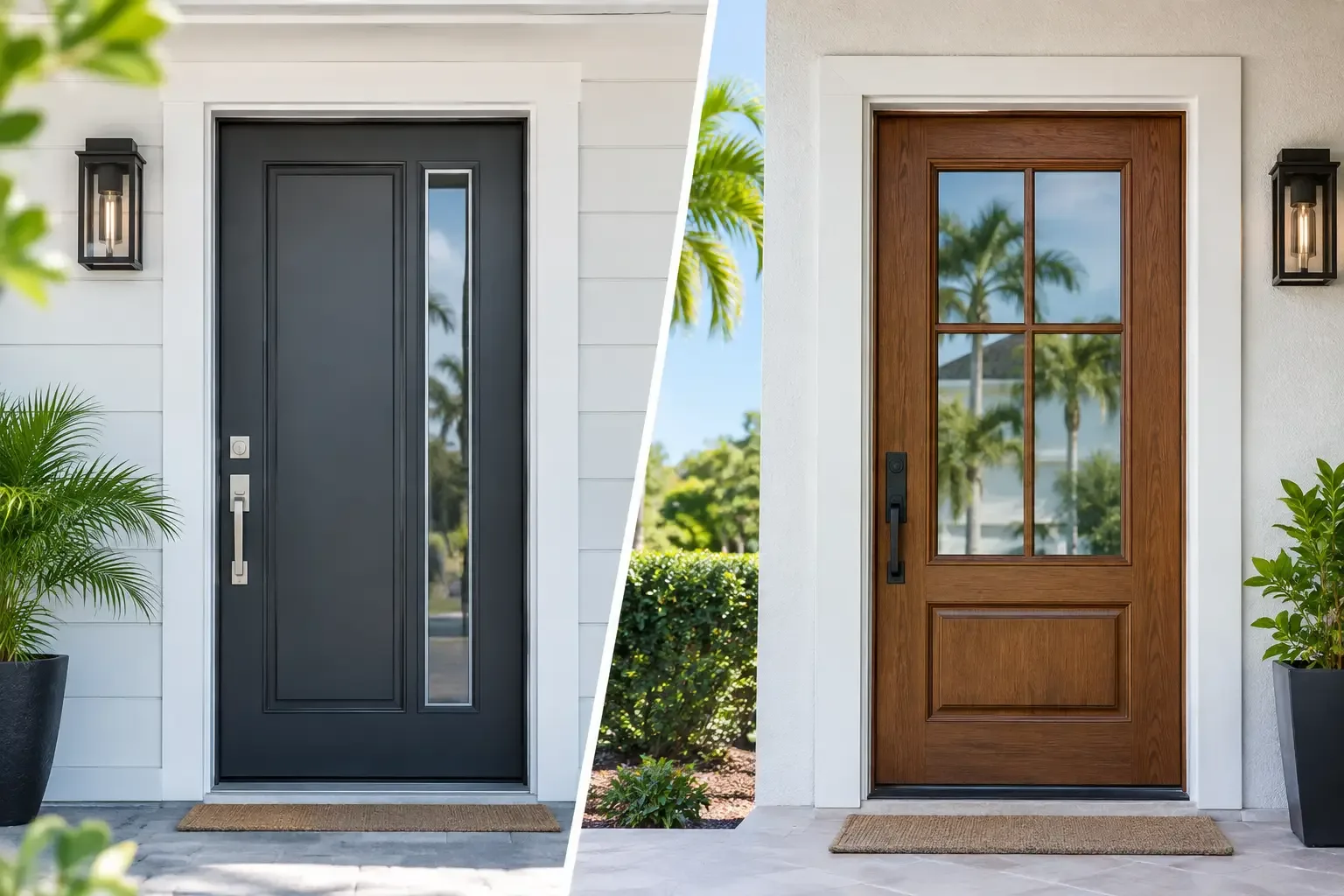
Fiberglass is often the preferred material when appearance is the leading factor. It can be finished in smooth, painted styles for a modern home or textured and stained to resemble mahogany, oak, or other wood species. It delivers much of the warmth of a wood entry door without the same exposure-related maintenance concerns.
Steel tends to suit clean-lined designs, painted finishes, and contemporary architectural styles. It can also work well for homeowners who want a durable, uncomplicated entry door with limited glass. While steel doors can be attractive, deep faux-wood texture and custom stain effects are usually more convincing on fiberglass.
The surrounding architecture matters. A Mediterranean-style home may call for arched glass, sidelites, and a warm stained finish. A newer contemporary property may look best with a smooth-panel door, narrow impact glass inserts, and a dark painted finish. The material should support the design, not limit it.
Cost Should Include Ownership, Not Only Purchase Price
Steel entry doors frequently have a lower initial cost than comparable fiberglass doors, particularly in standard sizes and simple configurations. That can make steel a practical solution for investment properties, secondary entrances, or homeowners who want a strong, budget-conscious upgrade.
Fiberglass may cost more upfront, especially with custom finishes, decorative glass, and impact-rated options. Its resistance to rust, lower maintenance demands, and long-term finish stability can make it the more economical choice for a highly exposed front entry. The right comparison considers expected service life, maintenance, energy performance, and the value the door adds to the property.
For either material, the cost of a code-compliant impact installation includes more than the door itself. Measurements, product engineering, permits, HOA documentation where required, removal of the existing unit, wall-opening preparation, installation, sealing, cleanup, and final inspection all contribute to a successful result.
How to Make the Right Choice
Choose steel when you want strong security, a straightforward painted design, and a competitive price point, especially in a lower-exposure location. Choose fiberglass when you want corrosion resistance, a wood-look or custom finish, better thermal separation, and less concern about moisture damage over time.
Then verify the details that matter most: the door’s Florida approval, impact rating if required, glass specification, frame material, locking system, hardware finish, threshold design, and anchoring method. A beautiful door that is not approved for the opening or installed to manufacturer specifications is not a complete solution.
At Avrax Impact Windows & Doors, the selection process begins with the property itself - its location, exposure, existing opening, architectural style, and protection requirements. That allows homeowners to make a confident decision while keeping permitting, product approvals, and installation accountability under one roof.
A front door should make your home feel more secure every time it closes. Start with the material that fits your design and maintenance expectations, then insist on an approved impact system and professional installation that protects the opening when conditions are at their worst.