Compare panels vs shutters for South Florida homes. Learn how cost, deployment, code approvals, security, and daily use affect hurricane protection now.
A storm warning is not the time to find missing panel bolts, drag heavy corrugated sheets from storage, or discover that a shutter will not close. For South Florida property owners, the panels vs shutters decision is about more than price. It affects how quickly your home can be secured, how it looks between storms, and whether the protection system performs as approved when hurricane conditions arrive.
Hurricane panels and hurricane shutters can both be effective options when they are properly designed, approved, and installed. The better choice depends on your openings, budget, property type, and how much hands-on preparation you are willing to manage before every storm.
What You Are Comparing
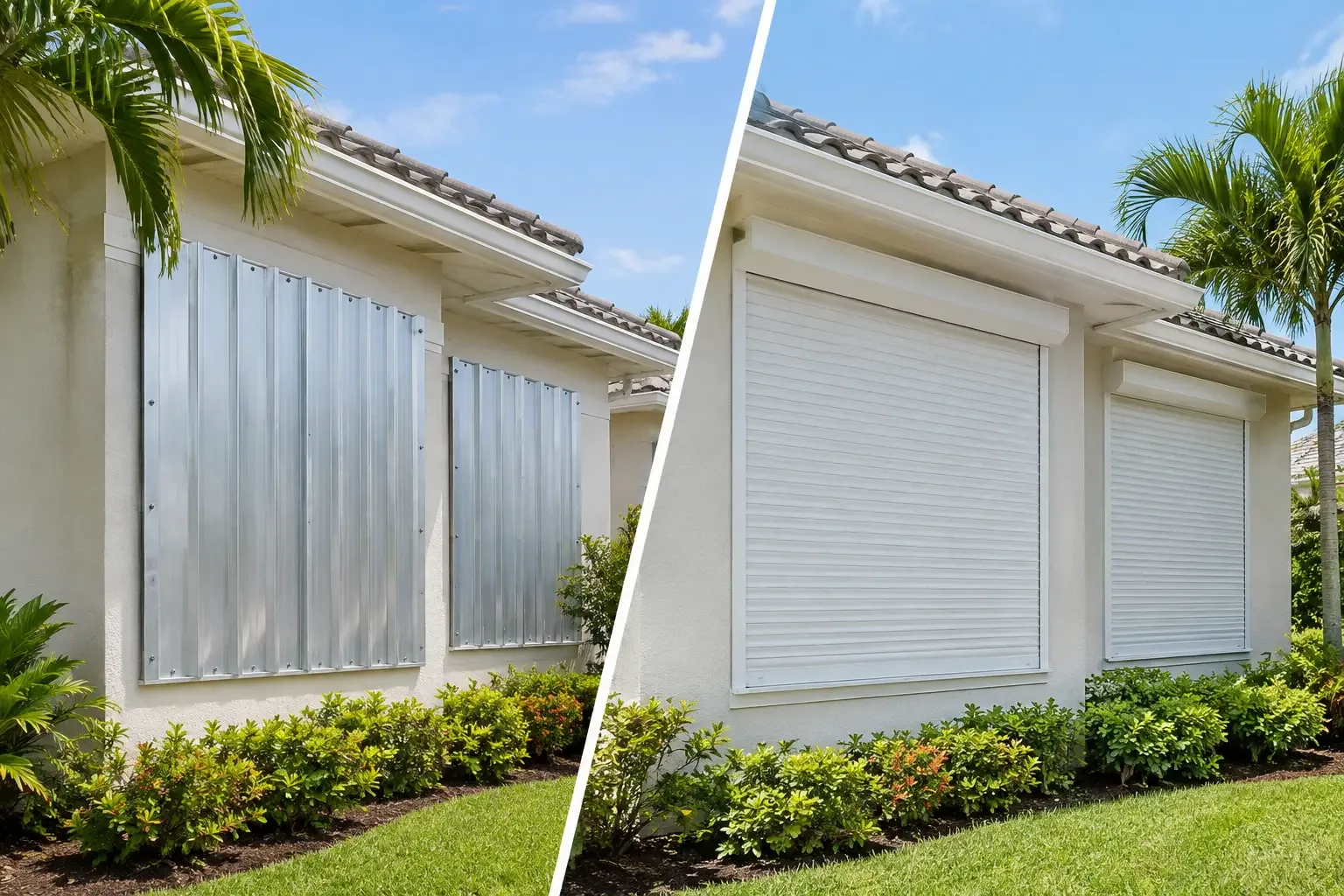
Hurricane panels are removable barriers installed over windows, doors, and sometimes large openings. They are commonly made from corrugated aluminum or steel, although clear polycarbonate panels are also available for homeowners who want natural light while their openings are covered. Panels attach to anchors, tracks, or a mounting system installed around each opening.
Hurricane shutters are a broader category of permanently mounted systems. Accordion shutters fold to the sides of an opening. Roll-down shutters lower from a housing above the window or door, often by crank, motor, or battery-supported operation. Bahama and colonial shutters remain visible on the exterior and can add a distinct architectural look while providing storm coverage when secured.
The key distinction is deployment. Panels must be located, carried, matched to the correct opening, and fastened in place. Shutters remain at the property and are generally faster to close. Neither category earns its protection rating simply by its name. The product approval, mounting method, fasteners, wall condition, and installation quality all matter.
Panels vs Shutters: Protection During a Hurricane
A properly approved system is engineered to resist specific wind pressures and impact conditions. In South Florida, those requirements can be demanding, particularly in Miami-Dade and Broward County. Your selected protection must match the applicable Florida Building Code requirements, local jurisdiction rules, and the actual size and location of each opening.
Panels can provide serious protection when installed exactly as designed. Their limitations are practical. A large home may require dozens of labeled panels, multiple hardware types, ladders, and substantial time before a storm. If a homeowner is out of town, physically unable to install them, or unable to secure help during a crowded evacuation window, the system offers no protection until it is in place.
Shutters reduce that dependency. Accordion shutters can usually be closed by one person from the exterior, while many roll-down systems can be operated quickly from inside or outside the home. That convenience is particularly valuable for second homes, aging homeowners, rental properties, and commercial buildings where storm preparation needs to be repeatable and accountable.
However, shutters are not automatically superior for every opening. A roll-down shutter over a wide patio door or expansive glass opening requires an appropriately engineered system. Accordion shutters need clear side space for stacking and a smooth operating path. Decorative shutters must be closed and properly locked to provide their intended protection. The right product is the one approved for the opening and realistic for your household to use every time.
Daily Ownership Changes the Equation
Panels are largely invisible once stored. For homeowners who want to preserve the existing exterior appearance and have a smaller number of openings, that can be appealing. They also avoid the permanent tracks, housings, or side stacks associated with many shutter systems.
The trade-off is storage and readiness. Panels need a dry, organized location where they will not bend, corrode, or become separated from their hardware. Each piece should be clearly marked for its opening. Fasteners and wing nuts should be checked periodically, not for the first time when a named storm is approaching.
Shutters are more visible, but they offer convenience throughout the year. Some homeowners use them for privacy, light control, or added security when traveling. Bahama shutters can provide shade, while roll-down systems can help darken rooms and reduce exposure to wind-driven rain. Those benefits depend on the style and installation, and they should not be confused with the energy performance of impact-rated insulated glass.
Maintenance still matters. Tracks must stay clear, moving components need occasional service, and motorized shutters should be tested before hurricane season. A shutter that has not been operated in years can become a problem at the worst possible moment.
Upfront Cost Versus Long-Term Value
Panels are usually the lower upfront-cost option, especially for straightforward window openings. For a homeowner balancing an immediate protection need against a limited budget, they may be a sensible solution. The final cost rises with custom sizing, unusual shapes, high elevations, required tracks, and difficult installation conditions.
Shutters typically require a larger initial investment because they are permanently mounted systems with more materials, labor, and mechanical components. Roll-down shutters generally sit at the higher end of the range, particularly when motorization, battery backup, or controls are included. Accordion shutters can offer a practical middle ground for many homes.
The real comparison should include more than the installation quote. Consider the value of reduced storm-prep labor, the likelihood that your system will be deployed correctly, potential maintenance, exterior appearance, and the expected time you plan to own the property. For some homeowners, the lower initial cost of panels is the right answer. For others, permanent shutters are worth the additional investment because they make protection easier to use.
Approval and Installation Are Not Details
A hurricane-protection system is only as reliable as its approval and installation. Products should be selected based on their documented performance for the opening, substrate, configuration, and design pressures involved. A solution that works on a concrete block wall may require a different fastening approach on a wood-frame structure or around an existing door system.
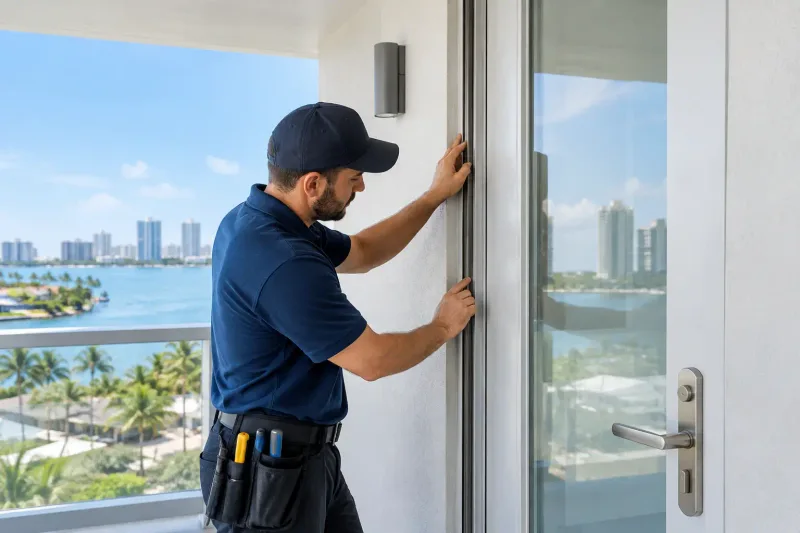
This is where professional site evaluation matters. Installers should inspect the opening conditions, take accurate measurements, identify mounting limitations, and confirm how the system will meet local permitting requirements. In communities with HOAs or condo associations, exterior shutter color, style, and visible components may also require approval before work begins.
A full-service contractor can manage product selection, permitting, HOA coordination, installation, cleanup, and final project completion so those details do not become the homeowner's burden. At Avrax Impact Windows & Doors, the goal is not simply to place a barrier over glass. It is to deliver a code-conscious protection system that is properly fitted, professionally installed, and ready when conditions change.
When Panels Make Sense and When Shutters Are Better
Panels are often a strong fit for budget-focused homeowners with a limited number of openings, reliable storage, and the ability to install them well before storm conditions worsen. They can also work for properties where permanent shutters would conflict with architectural preferences or HOA restrictions.
Shutters are often the better fit when convenience, quick deployment, frequent travel, or reduced physical effort is a priority. They are especially practical for homes with many openings, waterfront exposure, rental properties, and businesses that need a consistent storm-preparation process. The best shutter style depends on the opening size, available wall space, desired appearance, and required approval.
There is also a third path worth considering during a major renovation: impact-rated windows and doors. Unlike panels and shutters, impact glass provides permanent protection without installation or closure before a storm. It can also improve security, noise reduction, energy efficiency, and daily curb appeal. For homeowners replacing aging windows or sliders anyway, it may provide more complete long-term value than adding a separate protective layer.
Before hurricane season, walk your property with a professional and ask one practical question: can every protected opening be secured quickly, correctly, and without last-minute uncertainty? The answer will point you toward the system that gives your household real peace of mind.